
Bill Siwicki
AI & ML Intelligence
The health system has a three-pronged strategy: leveraging pre-built tools, maximizing robotic process automation for efficiency and deploying LLMs to provide human-level reasoning across its operations.

Nursing and IT
PocketRN reduced documentation time by 60% and assessment meetings by 15 minutes per visit. Further, it saves the nursing team 33 hours daily – lowering administrative overhead by about $27,720 each month.
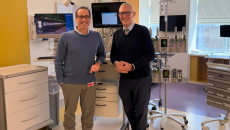
Two of the hospital's physicians explain how the decision support technology aggregates patient signals to indicate health trajectories – which tells clinicians when to evaluate a patient's evolving state and determine an appropriate response.

AI & ML Intelligence
The challenge is not in using artificial intelligence but ensuring the technology is implemented responsibly, in ways that truly benefit patients and providers, says Darrell Bodnar of North Country Healthcare.

Success Stories & ROI
The rural health system has seen a significant reduction in employee turnover with the technology – an impressive feat, given national workforce challenges.

AI & ML Intelligence
Aaron Wootton, chief information officer at Stormont Vail Health, says artificial intelligence deployments not grounded in clearly defined outcomes create short-term enthusiasm – but rarely deliver sustainable value.

Nursing and IT
The health system's chief nursing officer offers a close look at the successful rollout of virtual nursing. Among other things, the team redesign and technology gave 18,000 hours back to floor nurses in year one – from 59,000 virtual sessions.

Success Stories & ROI
Bolstering in-house staff with external professionals led to an increase in daily patient volume from 18 to 22 patients per physician, a 50% reduction in time-to-hire, a 50% improvement in operational efficiency, and a reduction in administrative overhead.

AI & ML Intelligence
At Dermatology Partners, 25% of AI-routed calls are resolved through appointment-related tasks. Staff are optimistic about clinical task workflow – their near-term goal is to exceed a 50% AI resolution rate.

A central challenge today, says Dr. Patsy McNeil, is how to implement artificial intelligence in ways that measurably strengthen clinical workflows and workforce sustainability while upholding rigorous bioethical standards and protecting patients.