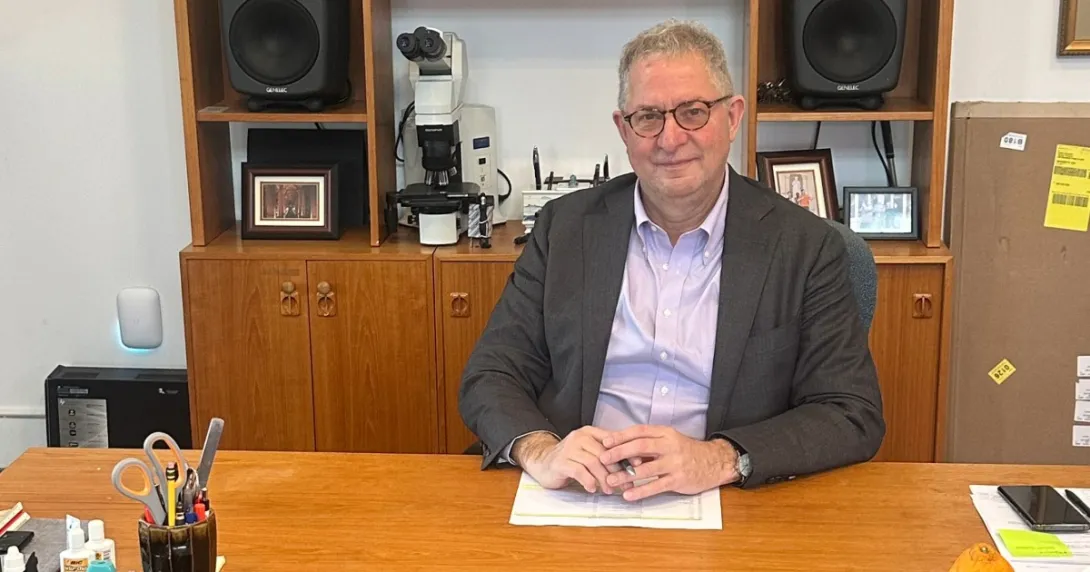
Dermatology Partners COO Andrew Frankel
Photo: Dermatology Partners
Dermatology Partners is one of the largest physician-owned dermatology groups in the U.S., with 80 providers across 41 locations in Pennsylvania, Delaware and Maryland.
THE CHALLENGE
The dermatology group manages between 2,000 and 4,000 inbound calls per day for appointments, clinical questions and referral coordination. Call volume is highly variable, with significant surges early in the day and early in the week – Mondays carry roughly double the volume of Fridays, and mornings are substantially busier than afternoons.
"Exceptional customer service is central to our differentiation, yet staffing to peak demand levels at all times is fiscally impractical," said COO Andrew Frankel. "New patients and inbound referrals – our highest-value growth opportunities – presented an additional challenge.
"Many callers begin the scheduling process unprepared, which frequently extended appointment booking from an expected 5-7 minutes to 15-20 minutes," he continued. "During peak periods, these extended calls tied up experienced agents and constrained access for other patients."
Although voicemail calls are returned within 24 hours, this often creates a cycle of missed callbacks and delayed resolution, diminishing both efficiency and patient experience, he added.
Leaders concluded the group needed a scalable system that could absorb surge capacity, protect new patient access and reduce reliance on voicemail without permanently increasing fixed staffing.
PROPOSAL
Dermatology Partners evaluated artificial intelligence for flexible surge capacity. It found most vendors priced their services per call or per resolution, offering a financially variable alternative to fixed hourly staffing during peak demand periods.
"The right AI platform could provide patient, thorough scheduling support while relieving pressure on our human agents," Frankel said. "Many early AI models relied on voice initiation followed by text-based engagement. Given our significant older patient population, we determined that text-dependent workflows would not provide an optimal experience.
"We, therefore, narrowed our evaluation to fully interactive voice AI capable of managing the entire scheduling process conversationally," he continued. "With more than 80 providers – each with nuanced scheduling templates, insurance restrictions, service types and specialty constraints – we required a sophisticated system capable of replicating human scheduling judgment."
The group decided on technology from vendor EliseAI, which Frankel said demonstrated a natural voice cadence, strong conversational accuracy and the technical capability to integrate deeply into existing health IT systems.
MEETING THE CHALLENGE
Staff deployed the agentic AI voice assistant within the inbound call queue to answer and schedule patient appointments. The system integrates directly with the AdvancedMD practice management platform via API, reading real-time availability and writing directly to the appointment table for new, follow-up, rescheduled and confirmed visits.
"Initially, non-appointment calls were transferred to live agents," Frankel noted. "However, analysis of those transfers revealed an opportunity to structure clinical requests more efficiently. We developed workflows enabling the AI to capture medication refill requests, wound-care questions and other simple concerns as documented tasks.
"These tasks are written directly into our Modernizing Medicine EHR for clinical staff review and resolution," he continued. "Rather than fielding every phone call in real time, staff can now address requests in an organized workflow, reducing interruptions and allowing greater focus on direct patient care."
RESULTS
Dermatology Partners' deployment of the agentic AI technology continues to evolve, but results are steadily improving. Resolution rates have increased incrementally each month as workflows are refined, Frankel reported.
"Currently, approximately 25% of AI-routed calls are resolved through appointment-related tasks, enabling our human agents to focus on more complex and emotionally nuanced interactions," he explained. "We monitor performance daily – tracking handled calls, resolution type, scheduling success rates and backlog reduction.
"We are particularly optimistic about the clinical task workflow and expect continued improvement as we measure 24-hour and 72-hour task resolution rates," he concluded. "Our near-term goal is to exceed a 50% AI resolution rate, at which point AI will serve as a scalable first-line response that extends rather than replaces our human team and strengthens overall patient engagement."
Follow Bill's health IT coverage on LinkedIn: Bill Siwicki
Email him: bsiwicki@himss.org
Healthcare IT News is a HIMSS Media publication.
WATCH NOW: The model context protocol at work in AI and clinical workflows


