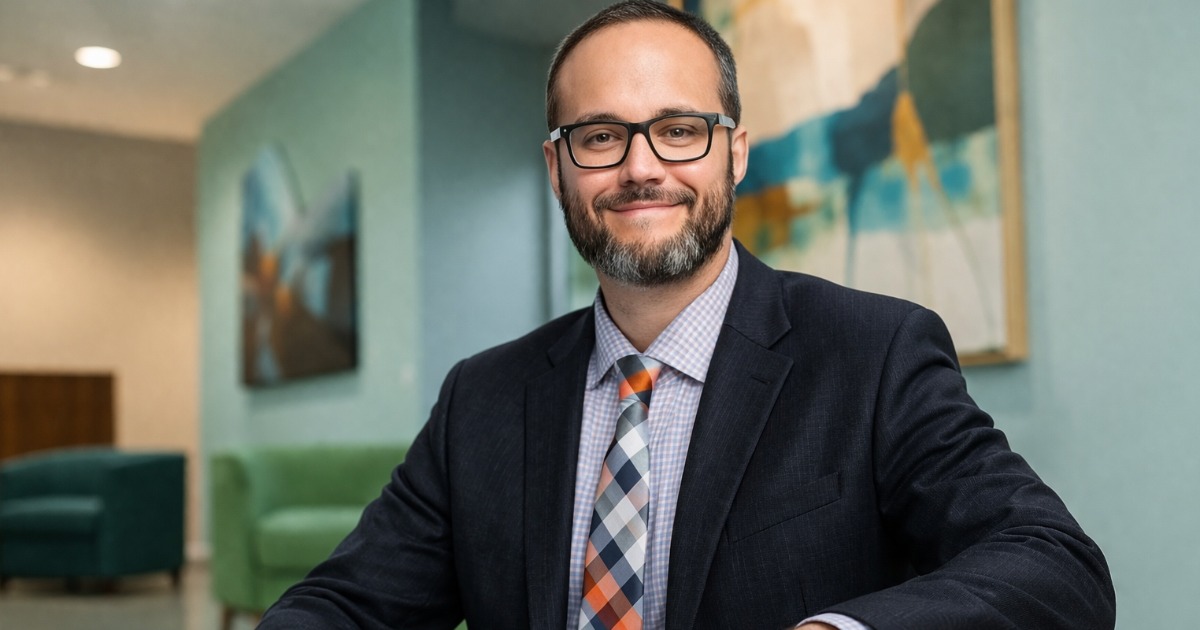
Raza Fayyaz, CIO at Aultman Health System, based in Canton, Ohio
Photo: Raza Fayyaz
It is a well-worn trope to say the United States has a "sick care" system rather than a proactive health system focused on wellness.
It's not that hospitals don't want to fix this. The challenge is that they're all battling the same headwinds of chronic staffing shortages, increasingly complex decision flows and razor-thin margins, says Raza Fayyaz, chief information officer at Aultman Health System, a three-hospital, nonprofit health system based in Canton, Ohio.
No longer sustainable
"Every health system is fighting to improve quality, experience and readmission rates while keeping a close eye on their observed versus expected ratios," said Fayyaz. "In this environment, the status quo is no longer sustainable.
"As a result, the most critical issue today is the transition from experimental artificial intelligence to operational AI," he explained. "Technologies like large language models, generative AI and agentic workflows offer the first real tools we've had to steer these giant ships in a proactive direction."
It also is important to note the real "technology" is not just AI itself but the elimination of the administrative tax placed on clinicians, he added.
"Our doctors and nurses didn't go to school to become data entry clerks," he said. "AI represents the first technology that promises to give the gift of time back to the bedside, allowing providers to spend more face time with patients again."
A 3-pronged strategy
Aultman Health System views AI not as a means to replace the workforce but as a force multiplier to empower them. Fayyaz said as a CIO, he is fortunate to work with a CEO and C-suite team who view AI as a strategic imperative and not just a "CIO thing."
"We currently are executing a three-pronged strategy: leveraging pre-built tools, maximizing robotic process automation for efficiency, and deploying LLMs to provide human-level reasoning across our operations," he reported.
"Our frontline AI includes ambient listening for physicians, AI-first EHR workflows and agentic nursing systems," he continued. "Internally, we are developing retrieval-augmented generation models to handle patient discharge education and help desk support."
Looking ahead, Aultman's vision for the supply chain is a closed-loop financial system.
"We are architecting agents to track approvals against invoices and overall spend, directly tying the 'why' of a purchase to the specific metrics that prove the ROI of the projects we implement," he explained. "To support all of this, we have established a rigorous data and AI governance framework to ensure every tool is safe, ethical and accurate."
A cultural shift
With all of this in mind, Fayyaz said his primary advice for healthcare leadership is to treat AI as a cultural shift, not a technical project.
"Leaders must move past 'AI FOMO' and establish a North Star that defines AI as a complement to labor rather than a substitute," he advised.
He recommends health IT leaders follow what he calls the "four P's": purpose, people, process and platform.
"For purpose, define your 'why,'" he explained. "You cannot implement effectively without a clear vision of what you want to achieve for your patients and staff. For people, address the anxiety spectrum. There has been so much doom and gloom in the news about AI that an emotional gap has formed. Leaders must publicly reject the headcount reduction narrative to provide the psychological safety their workforce needs to innovate. AI investments are worthless if people don't use them.
"For process, identify 'where,'" he continued. "Find champions within the workforce, consisting of a healthy mix of physicians, nurses and administrative staff who can spot the friction points where AI can make a difference. And for platform, secure your 'how.' To have an effective program, you need strong data governance and a platform that aligns with your specific clinical needs while preventing shadow AI."
Finally, Fayyaz encourages healthcare leaders to get their hands dirty.
"Build a simple agent to summarize your daily calendar or emails using tools like Microsoft Copilot or Gemini," he advised. "If we don't lead this, the AI will happen to us instead of happening for us. One thing is certain: AI is not a passing fad.
"Look at the recent story of Paul Conyngham in Australia, who used ChatGPT and AlphaFold to create a personalized mRNA vaccine for his dog's 'untreatable' cancer, all while not being a biology expert," he concluded. "When a layperson can use AI to do high-level oncology, it's a beacon of the future. AI will enable us to take medicine to places we cannot even imagine today."
Follow Bill's health IT coverage on LinkedIn: Bill Siwicki
Email him: bsiwicki@himss.org
Healthcare IT News is a HIMSS Media publication.
WATCH NOW: HIMSS Global Conference attendance creates 'chosen family' relationships