Patient Engagement

The region's healthcare leaders outline the key digital health and AI trends they expect will shape clinical care, data use, and innovation in the new year.

Its private operator says one of its modules, not the whole app, was compromised, based on an independent forensic analysis.
Marissa Fayer, DeepLook Medical CEO, says that true patient empowerment depends less on new technology and more on increased availability and affordability as well as culturally sensitive practices that respect patients' needs.

AI & ML Intelligence
At Annapolis Internal Medicine, patient satisfaction ratings jumped, labor capacity more than doubled without adding staff, and hold times dropped from four minutes to under one minute, all because of the agentic AI technology.

By searching and cross-referencing all electronic health record data, large language models are helping to provide leading-edge oncology care to more patients while freeing up nurses' time, says Dr. Aaron Gerds at the Cleveland Clinic’s Cancer Institute.

Telemedicine can bring down the wait to see a specialist from months to hours, while reducing costs. Health systems can do well to create telehealth-first specialist programs that refer to in-person visits when necessary, a teledermatologist says.
Serving as the primary liaison for the $50 billion Rural Health Transformation Program, the ORHT is now responsible for coordinating, overseeing and driving rural healthcare policy in the United States.

CEO Lim Kooi Ling shares what sets the Penang-based specialist hospital apart from other finalists and how digitalisation contributed to its recognition.
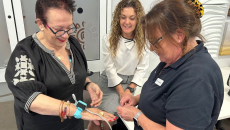
Southern NSW Local Health District has designed a remote patient monitoring program with Philips Australia to bring multidisciplinary care teams to homes, helping free up more emergency beds.