Search

Australia is investing heavily in digital health – but without redefining ROI beyond short-term financial returns, much of its true value risks going unmeasured.

The new committee under the Australian Digital Health Agency will advise the government on the safe rollout of AI, telehealth, and data sharing as digital health adoption accelerates nationwide.

Some of the healthcare organizations that could most benefit from artificial intelligence don't have the resources to take advantage of it. At HIMSS26, ideas were explored to help level the playing field for community and critical access hospitals.

Physician staffing shortages are serious, with rural hospitals in particular having a difficult time keeping enough doctors onsite. Virtual hospitalists can handle admissions, rounding and discharges from afar, says one physician expert.

While the many dramas on Capitol Hill may make for interesting news cycles, "state government is the infrastructure of our political system." Just as states are in charge of medical licensure, many are leading the way on setting AI guardrails.

The CAIO should not just understand both of those disciplines, but intuit what AI is good and bad, what's scalable and whether it's the right fit, says Sameer Sethi, the New Jersey health system's chief AI and insights officer.

The U.S. Department of Homeland Security sees three areas of concern as artificial intelligence is used across critical infrastructure sectors: attacks using AI, attacks targeting AI systems and design, and implementation failures.

In discussing social determinants of health data utilization, Dr. Hilary Hatch, chief clinical officer at Phreesia, describes how analytics and patient engagement tools are streamlining workflows and helping providers respond to more patients in need.
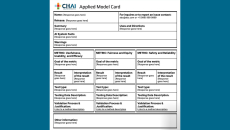
The coalition's new draft certification frameworks, which could be finalized in six months after more stakeholder feedback, offer a way forward for artificial intelligence assurance labs and basic model transparency.

While there's been progress across government and industry, the agency said the new technology strategy emphasizes health equity, public health, AI and cybersecurity to better connect the health system with health data "for all health IT users."