Photo: Cavan Images via Getty Images
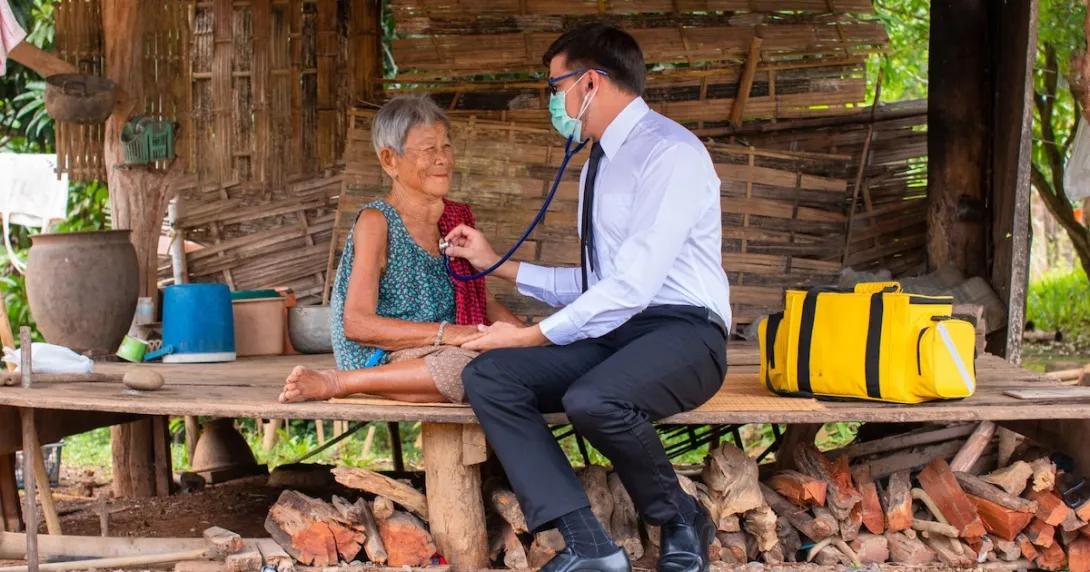
India's Union Ministry of Health and Family Welfare has unveiled a mobile application to support and streamline the clinical workflow of community health officers, as the government expands primary healthcare packages.
The mobile app developed by the Indian Council of Medical Research (ICMR) is a clinical decision support and assistant tool for CHOs serving Sub-Centre Ayushman Arogya Mandirs (SC-AAMs).
HOW IT WORKS
Based on a media release, the app provides structured clinical workflows, akin to quick-reference checklists, for managing patients attending outpatient services at SC-AAMs. It offers "practical, step-by-step guidance on patient assessment, including history taking, physical examination, and relevant diagnostic tests, based on presenting complaints."
It features three sections: Workflows, Assessment Tools, and Treat and Counsel. It also adopts a colour-coded system for simplified clinical decision-making:
- Red, which indicates a potential immediate threat to life, requiring urgent referral;
- Orange, suggesting the need for specialist or medical doctor evaluation;
- Yellow, which covers mild to moderate conditions that are manageable at community centres, with or without teleconsultation; and
- Green, which denotes mild conditions or healthy cases manageable at community centres.
The app integrates patient registration, EHRs, teleconsultation support, diagnostic reporting, and follow-up tracking, as well as national digital health platforms.
WHY IT MATTERS
The MoHFW expects the app to help enhance the "quality, consistency, and timeliness" of primary care delivery while empowering CHOs with accessible and standardised clinical protocols.
Highlighting its value, the MoHFW said the app will enable CHOs to "promptly identify" cases requiring immediate referral to higher-level emergency care facilities. It can also guide pre-referral management to stabilise patients.
Besides that, the Health Ministry also said the app offers recommendations for appropriate case management, referral pathways, and teleconsultation with higher centres.
THE LARGER TREND
The launch of the mobile app for CHOs comes as the MoHFW expands the Comprehensive Primary Health Care by upgrading 150,000 community and primary health centres into "health and wellness centres." These centres provide a free comprehensive package of 12 health services, including those for non-communicable diseases, mental health, and elderly care.
Last year, a similar app was developed by Indian startup Qure.ai, called AIRA, a large language model-based co-pilot for optimising resources in primary care facilities. It helps automate patient data collection and provides decision support.
Meanwhile, an Indonesian regency (a second-level administrative subdivision in a province) in West Java, south of capital Jakarta, co-developed and trialled a generative AI-powered assistant tool for community health workers. TehAI, developed with Docquity, pulls information from a wide knowledge base, helping improve workers' knowledge to diagnose and treat tuberculosis, stunting, and hypertension.
In Singapore, a new educational pathway by a private school and 1doc is expected to launch this year to train health coaches and community health professionals in AI-enabled, digitally-driven care.