Photo courtesy of Inje University Ilsan Paik Hospital
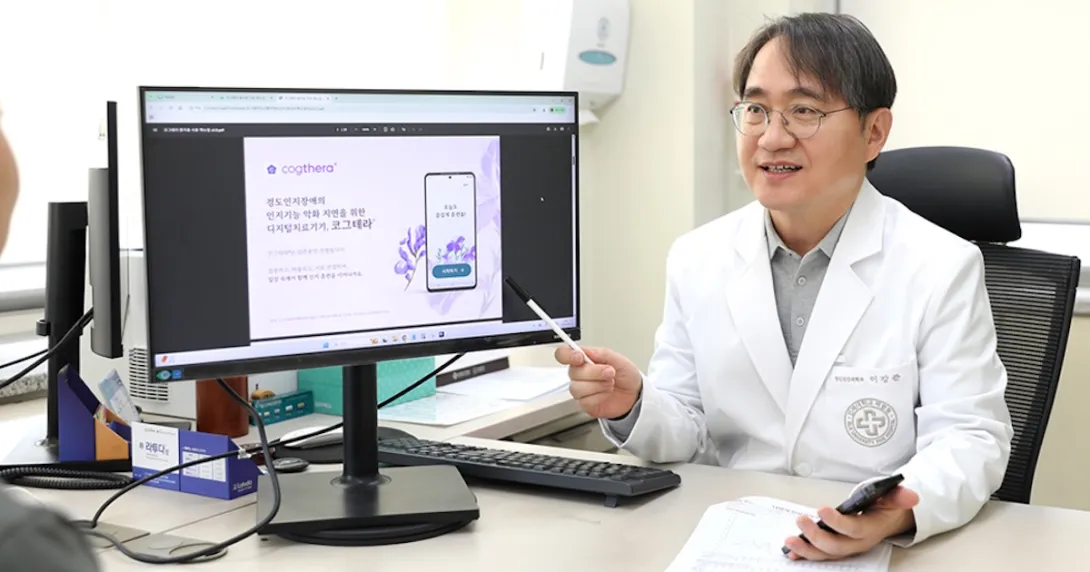
Ilsan Paik Hospital launches cognitive therapy DTx
Inje University Ilsan Paik Hospital in South Korea has introduced a government-approved mobile digital therapeutic device for specialist-prescribed cognitive intervention in patients aged 55 to 85 with mild cognitive impairment.
The smartphone-based software, called Cogthera, provides twice-daily cognitive training for about 12 weeks. It features a voice-based interface for senior users, automatically adjusts task difficulty based on patient performance, and lets medical staff monitor training performance and cognitive changes in real time through a dedicated management system.
Cogthera, developed by local company Emocog, was tested in a confirmatory clinical trial across seven university hospitals in Korea. Following its rollout, the hospital plans to offer more options for digital-based non-drug treatments.
Hong Kong HA expands digital leave certificates
Hong Kong's Hospital Authority (HA) will extend digitally signed electronic certificates to maternity/sick leave and maternity leave certificates from 24 April, replacing manually signed paper certificates.
The certificates, issued by doctors or midwives with the same legal effect as traditional versions, will carry an encrypted QR code for verification and be automatically stored in the Records feature of the HA Go mobile app.
The rollout follows the digitalisation of HA medical certificates and attendance certificates, supporting efforts towards smart hospital transformation.
Ajou University Hospital upgrades digital services
Ajou University Hospital in South Korea has upgraded its online medical record issuance system and introduced a mobile questionnaire service at its Health Promotion Center (HPC) as part of a broader expansion of digital patient services.
Based on a media release, the records upgrade allows patients to apply for image CD copies online, download medical records in PDF format via personal computer or mobile, send records by email to recipients such as insurers, and use offline payment after online application.
The mobile questionnaire, meanwhile, allows health checkup examinees to complete forms before visiting and links digitised responses directly to hospital systems.
The medical record digitisation project began in November 2023 and was developed from August last year to February this year. The new mobile questionnaire followed the HPC's rollout of mobile and email delivery for health checkup results in December; it comes ahead of a planned RFID-based movement management system this year.