White Papers
Amid the ongoing uncertainty of the economic climate and the shifting work landscape, organizations that employ hourly workers are under intense pressure to control operating costs and keep productivity high.
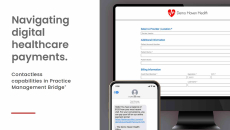
Patients are accustomed to using retailers’ contactless payment solutions for purchases, and they expect the same experience with healthcare providers. Establishing easy-to-use digital payment options encourages patients to pay promptly and can reduce time to collection.

This AGFA HealthCare whitepaper introduces the benefits of cloud-based EI for HCOs and discusses how to find the right cloud EI partner.
According to research by the American Hospital Association, growing after-hours workloads and administrative tasks are leading contributors to clinician burnout. ServiceNow's generative artificial intelligence (GenAI) streamlines workflows to help healthcare organizations (HCOs) address these concerns and leverage their existing EMR systems to improve experiences for patients and staff. This ServiceNow article presents the highlights of ServiceNow's HIMSS24 presentation, “Elevating Decision-Making Through GenAI.”
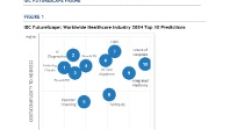
IDC Health Insights conducted a study to provide global healthcare executives with actionable insights and analysis for possible responses to future healthcare industry scenarios. These predictions for 2024’s healthcare industry landscape reflect the increasing drive to automate and deploy AI applications to reduce costs and improve patient care quality. The study also found a growing emphasis on sustainability and governance to help healthcare organizations build resilient infrastructure that can adapt to evolving challenges.

Healthcare organizations (HCOs) continue to face challenges in hiring and staffing retention, compounded by patients’ shifting expectations. Best-in-Class HCOs with “next-gen” patient care programs that deliver excellent clinical results and patient experiences through deploying artificial intelligence (AI) and automation are seeing significant performance success. This eBook explains how Aberdeen’s research identified these Best-in-Class HCOs, as well as defining the technologies these organizations are using to help them proactively meet patient needs throughout the care journey.
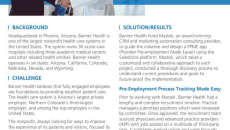
Banner Health, one of the largest U.S. nonprofit healthcare systems, is among the top employers in the U.S., with more than 50,000 employees operating in 28 hospitals. To improve its recruitment process, Banner partnered with Mastek to build a Provider Pre-employment Made Easier (PPME) app, an online job board, a candidate portal and a stakeholder portal using the Salesforce platform.
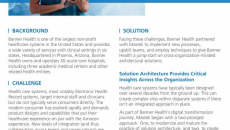
Banner Health, one of the largest U.S. nonprofit healthcare systems, serves patients across six states. As part of its digital transformation process, Banner partnered with Mastek to modernize its IT infrastructure and develop a governance framework.

As healthcare organizations (HCOs) transition from fee-for-service to value-based care models, healthcare leaders must determine how to enable data sharing across their organizations to improve care delivery and patient outcomes. Integrating their electronic health record (EHR) platforms with cloud-based systems such as Salesforce Health Cloud can help HCOs unify data from multiple sources to create a holistic, real-time view of a patient’s care journey.

Legacy analog telephone lines, also known as Plain Old Telephone Service (POTS), are becoming more expensive to maintain, leading organizations to seek alternatives. These POTS lines are used in life safety systems such as fire alarms, elevator phones and building entry systems, which need to follow compliance guidelines. However, carriers are phasing out these lines, charging more and providing less support. It’s time to modernize and reclaim profits.