White Papers

Modern healthcare facilities must be built with future patient and staff needs, as well as other factors like air quality and energy efficiency, in mind. Honeywell’s eBook explains how to construct new buildings in a way that maximizes operational efficiency, enhances patient and staff safety, and extends facilities’ longevity.
For many healthcare organizations (HCOs) working in a cloud environment, data visibility issues can present a challenge to maintaining regulatory compliance. ClearDATA’s CyberHealth™ Platform provides a real-time overview of an HCO’s data landscape, and its automated safeguards and controls with remediation steps enhance data security and compliance in the cloud.
Many healthcare organizations (HCOs) are struggling to both reduce costs and invest in digital transformation amid shrinking margins. However, HCOs can realize both goals by migrating to the cloud and redirecting the savings they realize through cloud migration into funding continued digital transformation.
Children diagnosed with diffuse midline glioma (DMG) or diffuse intrinsic pontine glioma (DIPG) generally have between nine and 11 months left to live. Join Mika Newton, CEO of xCures, and David Frigeri, managing director of healthcare data and analytics at Slalom, as they discuss Slalom’s work with xCures.
While patients expect personalized and convenient experiences from their healthcare providers, clinicians need access to patient data and clinical decision support to accommodate greater patient volumes and mitigate workforce shortages.
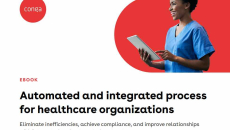
While most healthcare organizations (HCOs) have processes in place around contract creation, procurement and onboarding, these processes are generally manual, costly and time-consuming. This results in visibility gaps that increase the likelihood of errors, omissions or contract delays.

Healthcare facility security teams are tasked with guarding staff and patients, securing valuables, protecting data, and managing emergencies 24/7 while also maintaining regulatory compliance.

For call center customers, a great experience starts with skilled, efficient, experienced agents. Most agents need access to multiple channels and apps simultaneously: internal interfaces like a CRM and knowledge base as well as external engagement channels like social media and web chat accounts.

Across industries, IT leaders’ top priorities include eliminating unnecessary expenses, boosting efficiency and generating revenue through improved customer experiences. Implementing a unified communications platform like RingCentral’s can help businesses modernize their practices and realize these goals.

According to a Forrester report, RingCentral’s unified communications as a service (UCaaS) and contact center as a service (CCaaS) solutions result in improved customer experiences and cost savings for businesses. In addition, the study found that businesses using integrated UCaaS and CCaaS platforms benefited more compared to those that used separate unified communications and contact center platforms.