Workforce

Billed as the first commercialized ambient voice tool specifically for nurses within Dragon Copilot, the app, designed to reduce burdensome documentation, is already in use at several Mercy hospitals in Missouri and Arkansas.

Edward Marx, CEO of Marx Advisory, details the contributions needed from the boardroom with AI projects. He also discusses how to combat government policy and regulation slowing AI adoption.
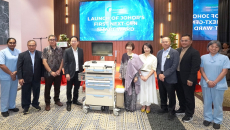
Private Regency Specialist Hospital's smart ward also reduced 63% of manual documentation.

Lisa Suennen, managing partner at the American Heart Association's VC arm, joins with MDisrupt CEO Ruby Gadelrab to discuss their work to built out technology that can connect innovators focused on brain and cardiac health.

The $50 billion in funding to be allocated annually among all states over 10 years may be insufficient, even as the RHTP could put pressure on the rural healthcare system over the long term.

The first of this two-part series looks at how limited access to agency expertise may have reduced the likelihood that states will hit the mark on their applications, which are due on Nov. 5.

In the third installment of this three-part series, clinical and IT leaders from the New Jersey health system discuss how its virtual acute care program is now enabling new innovations at its brick-and-mortar hospitals.

Christopher Kunney, partner IOTech Consulting, says the new C-suite role is similar to one that gained prominence 20 years ago. Both need to demystify technology and partner with stakeholders – board, execs, clinical, IT – across the ecosystem.

Also, the NSW state is helping foster cultural sensitivity among clinicians through virtual reality training.

UPMC Children's Hospital tailors its use of custom-built and vendor AI tools to clinicians' actual problems, says Dr. Srinivasan Suresh, with multidisciplinary oversight to help protect vulnerable patients.