Quality and Safety

"Health systems are investing greatly in innovative digital and AI technologies, but the gap between what technology can do and what clinicians actually use is where value is won or lost," says Children's Healthcare of Atlanta's Jeremy Meller.

Dr. Matt Sakumoto, Nabla's chief clinical product officer, says AI scribes can help doctors be more present during visits, but that hasn't necessarily improved patient experience scores.

Devices and sensors can spot subtle physiological changes to enable earlier intervention for patients with cardiometabolic disease, says Dr. Ami Bhatt, chief innovation officer at the American College of Cardiology.

The Catholic-run healthcare provider has moved to managed monitoring of its clinical integration systems to improve incident response and reduce downtime across its services.

HIMSS26 Changemaker honoree John Paganini says the Northern Ohio HIMSS AI Center of Excellence's diverse roster of members is working to advance healthcare AI in the region.

A busy and productive week in Las Vegas has demonstrated how health systems are "focusing on practical implementation," with "governance and trust finally being treated as design requirements" for successful artificial intelligence deployments.

The assessment found Korean hospitals show strong performance in governance and interoperability, but slower progress in patient-facing services.

Data segmentation and computable consent help protect sensitive information while enabling more equitable interoperability, explains Cambridge Health Alliance's Dr. Hannah Galvin, a HIMSS26 Health Equity Changemaker Awardee.
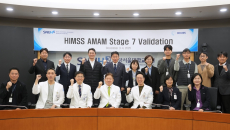
The Korean hospital is the first in Asia-Pacific to be validated for the modernised AMAM.

Institut Jantung Negara has improved ICU utilisation, clinical outcomes, and workflow efficiency through integrated digital systems.