Photo courtesy of Seoul National University Bundang Hospital
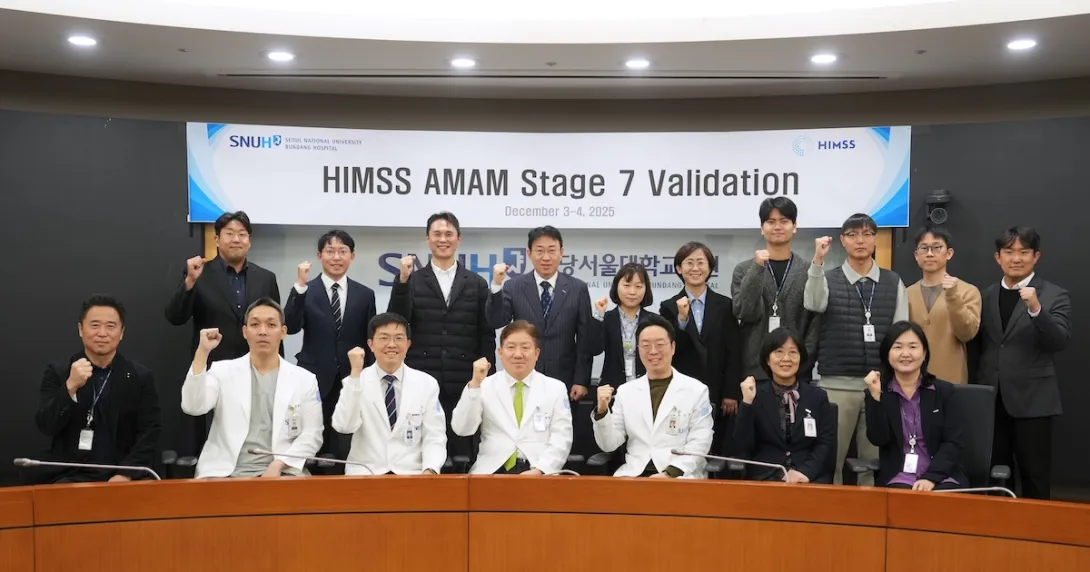
The Seoul National University Bundang Hospital in South Korea has been validated at the highest stage of the modernised HIMSS Analytics Maturity Assessment Model.
The modernised AMAM, introduced in 2024, assesses a healthcare organisation's analytics maturity across governance, life cycle, data and infrastructure, personalised analytics, and impact and outcomes.
WHY IT MATTERS
SNUBH adopted a phased, step-by-step approach to IT implementation, with protocols for utilising AI developed entirely under the leadership of the respective clinical departments, rather than enforcing a top-down deployment.
"This strategy was essential for building clinical trust and ensuring the workflows were fully embraced by our frontline staff," SNUBH CIO Dr Seyoung Jung said.
In an interview with Healthcare IT News, Dr Jung shared that their most significant challenge in meeting the requirements of Stage 7 AMAM was transitioning from traditional retrospective data analytics to establishing robust AI governance and proactively proving the clinical safety and efficacy of their predictive models.
The hospital focused on centralising intelligence through its proprietary data platform, CDW 3.0 (Healthcare Research Suite). This data warehouse, the hospital CIO explained, seamlessly aggregates diverse hospital data, including medical records, tests, and prescriptions, enabling on-demand analysis.
SNUBH also had to restructure its clinical feedback loop to ensure continuous AI safety, introduce a rigorous pilot testing phase within real-world clinical settings, and establish a robust governance system that reviews AI models' accuracy, sensitivity, and specific error hotspots categorised by patient cohorts.
Among its key IT implementations, SNUBH demonstrated how its AI-driven ECG triage system – dubbed ECG Buddy – reduced the time-to-treatment for three life-threatening conditions: ST-elevation myocardial infarction (STEMI), hyperkalemia, and pulmonary oedema. The application was first trialled in 2023 before its full integration in late April 2024.
Sharing findings, Dr Joonghee Kim of SNUBH’s Department of Emergency Medicine said the tool reduced the door-to-balloon time for treating STEMI to "about 8 minutes," which then led to a "9-fold reduction of the proportion of delayed percutaneous coronary intervention cases."
"Similarly, the time to IV calcium administration for hyperkalemia and the time to furosemide administration for pulmonary oedema were reduced to about 40 to 50 minutes."
THE LARGER TREND

Chief Information Officer
SNUBH
Dr Jung told this publication that SNUBH will "dramatically accelerate" its enterprise-wide AI transformation.
"We are committed to realising the essential value of digital healthcare by continually introducing rigorously verified, equitable, and highly reliable AI technologies into frontline clinical settings to improve patient safety and clinical outcomes."
Aiming to cement its position as a "global intelligent health system," SNUBH is also carefully considering validations for other HIMSS digital maturity models, including the Infrastructure Adoption Model and Digital Imaging Adoption Model.
SNUBH is also currently validated at Stage 7 of the HIMSS EMRAM, a recognition it has held four times over the past decade. Meanwhile, it was first validated at Stage 6 of the AMAM in 2024.
ON THE RECORD
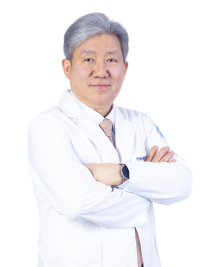
President and CEO
SNUBH
"Achieving Stage 7 of the modernised HIMSS AMAM is a monumental milestone for Seoul National University Bundang Hospital (SNUBH). As the first hospital in the Asia-Pacific region and the second globally to meet these rigorously updated criteria, this certification internationally validates our advanced data and AI capabilities. While our four consecutive HIMSS EMRAM Stage 7 validations, beginning as the first outside North America in 2010, proved our mastery of a highly efficient, paperless environment and led to our EHR system being exported to the Middle East, the United States, and Japan, AMAM Stage 7 signifies a pivotal paradigm shift. It demonstrates that our transformation has successfully evolved from simply digitising workflows to embedding a mature, enterprise-wide, data-driven culture. This ensures we are not only prepared to utilise AI safely and effectively in clinical settings but are actively defining the global standard for the future of medicine."
"We will continue to actively introduce verified AI technologies into clinical settings to improve patient safety and treatment outcomes, thereby realising the essential value of digital healthcare."