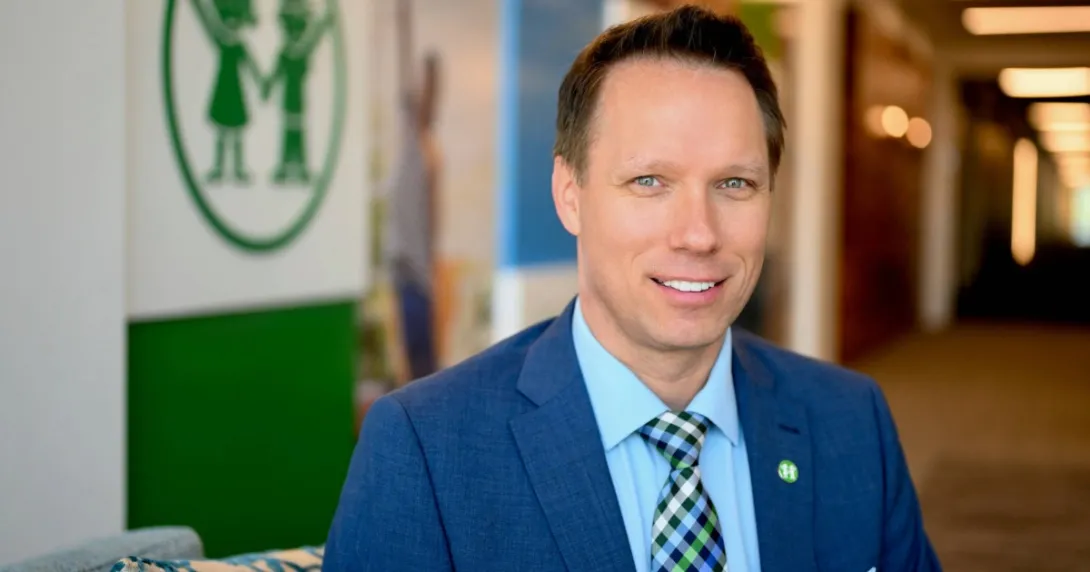
Jeremy Meller, CIO at Children's Healthcare of Atlanta
Photo: Children's Healthcare of Atlanta
Back in May 2024, Healthcare IT News interviewed Jeremy Meller, CIO at Children's Healthcare of Atlanta, before the opening of the new Children's Healthcare of Atlanta Arthur M. Blank Hospital.
Two years ago, Meller described the innovative technology investments that had been made there, with the goal of creating one of the most advanced children's hospitals in the U.S.
Today we spoke again with Meller to get an update on how the new hospital is coming along, and learn about the preparation and adoption strategies he and his team used to make big changes happen successfully. He also offered some lessons on what IT professionals who might be launching big changes of their own should be doing to prepare.
Q. Now that you have opened the new Arthur M. Blank Hospital, what have you learned from the experience?
A. One of the most important lessons we learned when we opened the new hospital wasn't related to any single technology – it was how to make transformative technology implementations actually stick. Health systems are investing greatly in innovative digital and AI technologies, but the gap between what technology can do and what clinicians actually use is where value is won or lost.
When we opened Arthur M. Blank Hospital in September 2024 – a $2.5 billion, 19-story facility with more than 60 new systems, 5,500 integrations and the world's largest fleet of autonomous delivery robots – we believed we had done the hard work. And we had.
The infrastructure was extraordinary and worked nearly flawlessly. We established an incredible data foundation for our current and future AI efforts. And we delivered innovative new capabilities to help clinicians save steps and patients feel more comfortable.
But by January 2025, we were watching utilization stall a bit across some of the capabilities we hoped would make the biggest difference. Robots were operational but not optimized. In-room cameras for interpreter services had challenges. And some of our location features were under-utilized.
These weren't technology failures – the technology worked. Our challenge was in order to get all the possible value we could out of our technology investment, we had to address non-technology factors: the human friction, workflow interruptions and the moments where a familiar workaround beats a new process every time.
The industry keeps getting better at building amazing technology. We are in the business of leading people through it.
Q. How are you working on these issues today?
A. Our great opening was due to incredible preparation. Before opening day, we ran full day-in-the-life simulations with clinical staff in the actual space, walking actual workflows – over and over again. We stood up many dedicated project workstreams, tested relentlessly and closed our command center ahead of schedule due to a lack of issues. In fact, we had less than 20% more calls than we would have had on a normal weekday.
Once we were sure all core technologies were stable, we could focus on adoption. In early 2025 we stood up a team focused entirely on utilization. We surveyed more than 600 care team members to learn where challenges or learning gaps existed with new technology, and we started planning ways to address these obstacles to optimal adoption.
What we heard was specific and actionable. Connecting to a video interpreter required navigating far too many steps, and for a nurse mid-shift, that's not a minor inconvenience. So, we rebuilt the experience to a single click, then relaunched and retrained – and predictably, utilization followed.
The robot story was similar. IT didn't own the robot program on day one, but the smooth IT go-live created capacity to help the organization optimize our robots. We dug into the data, challenged our vendors, and worked directly with clinical and support teams to address what was creating friction.
Some of it was technical, but most of it simply came down to unfamiliarity. We optimized traffic patterns, established support responsibilities across departments and addressed staff concerns. Now those robots run around the clock, handling more than 1,500 medications, meals, specimens and supplies every day.
Q. What should health IT leaders at other hospitals and health systems who are ready to launch a big change be doing now?
A. Three things – and doing them in this order matters.
First, design for outcomes before you design for technology. Every decision we made for Arthur M. Blank Hospital was anchored to three questions: Does this save steps for clinicians? Does this support better decisions? Does this improve the experience for patients and families? That discipline kept us from chasing novelty and kept us focused on building an integration foundation deep enough to actually support AI and automation at scale. The technology is only as valuable as what it enables.
Second, take simulation seriously – not as training, but as discovery. No classroom exercise surfaces what you'll find when a nurse is navigating a 500-foot hallway at 2 a.m. responding to a monitor alarm on a mobile device. Get your people into the real environment, running real workflows, before day one. The issues it reveals will be ones you never anticipated.
Third, plan your relaunch before you ever launch. Every major implementation will have an adoption dip. The organizations that succeed are the ones with the humility to survey their users honestly, fix what's broken without defensiveness and re-engage with the same energy they brought to go-live. We opened our doors on Sept. 29, 2024, but in a real sense, that was just the beginning of the work.
Follow Bill's health IT coverage on LinkedIn: Bill Siwicki
Email him: bsiwicki@himss.org
Healthcare IT News is a HIMSS Media publication.
WATCH NOW: Closing the medication information gap with AI


