Workforce
Maintaining close connections with clinical leaders is essential to optimizing clinical workflows, says Dr. Michael Zappa, chief clinical officer at Cape Fear Valley Health and physician advisor at Juno Health.

Two cardiology peak bodies in Australia and New Zealand have released a position statement guiding clinicians in effectively using telehealth.

National University Hospital CMIO Dr Ling Zheng Jye outlines the changes necessary for the National University Health System to effectively use data to bring forth innovations in quality and patient safety.

The four-hospital Florida health system's enterprise implementation was daunting, as any health IT leader knows. But getting outside, at-the-elbow help made for a smoother, safer and more controlled transition. The CMIO describes the big switch.

While global research shows a direct link between advanced digital maturity and better health and safety outcomes, a HIMSS26 session will dive into what still needs to be done on the frontiers of healthcare transformation.

New research from HIMSS and Guidehouse shows that more than half of hospitals surveyed say they're not yet able to deploy AI at scale. It highlights some steps providers can take to overcome a lack of operational readiness for artificial intelligence.

David Banks, president and CEO of AdventHealth, will address how hospitals can reframe challenges into next steps.
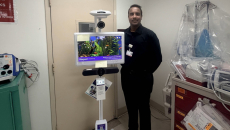
Virtual sitting supports continuous patient safety when bedside observation is needed. The 51-hospital health system narrowed its choices down to two very different models. The telemedicine chief offers a deep dive into this competition.

AI & ML Intelligence
So says Ryan M. Cameron, Children's Nebraska's newly minted chief information and innovation officer. He says provider organizations should pursue a small set of agentic AI projects – not as pilots for innovation's sake, but as fixes for concrete problems.

Success Stories & ROI
The hospital's previously manual program – which offers more pay to employees who volunteer for high-need shifts – has seen its error rate decrease by 72% and its shift fulfillment rate soar from 40% to 70%.