Clinical

SPONSORED
 |
04:50 pm |
August 13, 2024
|
04:50 pm |
August 13, 2024
|
04:50 pm |
August 13, 2024
Children diagnosed with diffuse midline glioma (DMG) or diffuse intrinsic pontine glioma (DIPG) generally have between nine and 11 months left to live. Join Mika Newton, CEO of xCures, and David Frigeri, managing director of healthcare data and analytics at Slalom, as they discuss Slalom’s work with xCures.

Healthcare facility security teams are tasked with guarding staff and patients, securing valuables, protecting data, and managing emergencies 24/7 while also maintaining regulatory compliance.

SPONSORED
 |
03:15 pm |
August 13, 2024
|
03:15 pm |
August 13, 2024
|
03:15 pm |
August 13, 2024
According to a Forrester report, RingCentral’s unified communications as a service (UCaaS) and contact center as a service (CCaaS) solutions result in improved customer experiences and cost savings for businesses. In addition, the study found that businesses using integrated UCaaS and CCaaS platforms benefited more compared to those that used separate unified communications and contact center platforms.
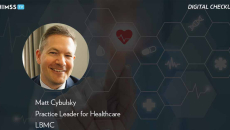
What are the trends in digital health implementation across health systems, and what needs to be considered when applying AI for value-based care? Matt Cybulsky, LBMC practice leader for healthcare AI, value-based care and product innovation, discusses.

"Telehealth already has proven its value in increasing access to care – but paired with effective, responsible AI usage, it holds the promise of more efficient, effective and personalized mental health services," a telepsychiatry provider CEO says.

The Center for Devices and Radiological Health says a new medical device discussion paper aims to spur conversation about reducing barriers and improving outcomes across diverse populations.

Sam Amory, managing director for Dedalus AMEA, says more patients should be open to sharing their healthcare data so they can better understand their own health.

As healthcare organizations (HCOs) move from fee-for-service care models to value-based care (VBC) models, data interoperability can provide a holistic view of the patient and provide the best possible care.

Interoperability standards were originally developed in the late 1970s and early 1980s to allow different clinical systems within hospitals to exchange data with the patient registration system. Infor Cloverleaf®, one of the original interface engines in use then, is still the core interoperability engine for more than one-third of U.S. hospitals.
External pressures like reimbursement reduction, clinical quality reporting mandates and price transparency rules further underscore the importance of bringing together diverse data sources.