Photo courtesy of Ewha Womans University Seoul Hospital
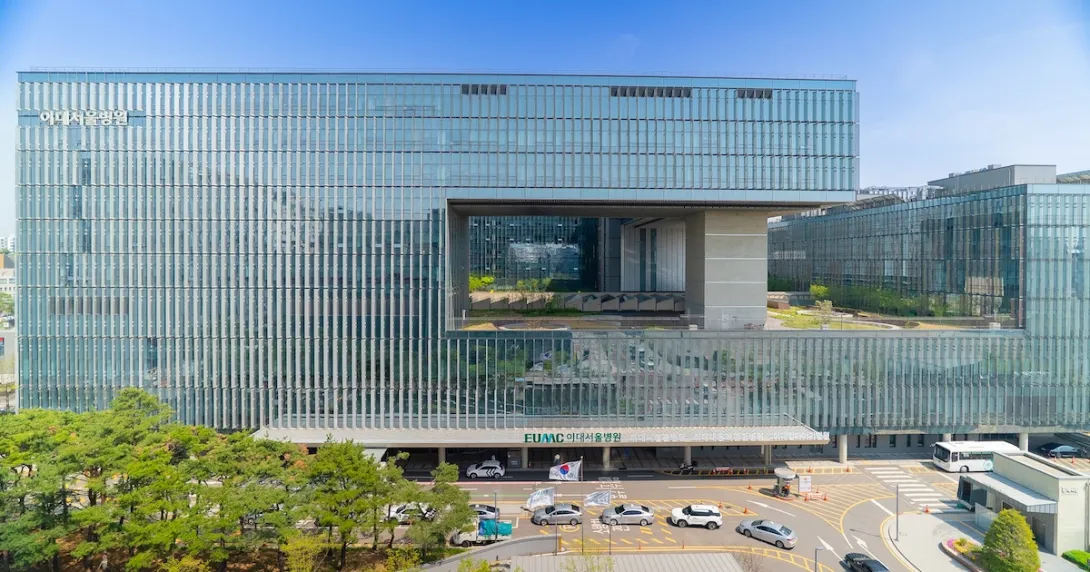
Ewha Womans University Seoul Hospital, a major teaching hospital in South Korea, has digitally streamlined the end-to-end patient experience, from appointment and admission to discharge and payment.
The over 1,000-bed hospital developed a smart patient service model that integrates AI technology from KT Corporation, Vitamin's platform, and KTis Corp's contact services.
HOW IT WORKS
It began in 2023 when it enabled reservations for and confirmations of medical appointments via Kakao Talk – the first hospital in the country to do so. This, the hospital said, has allowed same-day admissions to be made without waiting at the reception counter.
Recently, Ewha Womans Seoul Hospital also enabled online settlements of medical fees ahead of hospital visits and the viewing of medical examination results on mobile devices.
It also went paperless in issuing documents, including medical expense receipts and detailed billing statements, through mobile devices, which has allowed one-stop processing of health insurance claims.
The hospital also said that viewing surgery and discharge progress, bill payments, insurance claims, and taxi hailing can all be done in the hospital room.
Digitalisation was also extended to the hospital's workforce, according to Ewha Womans Seoul; recently, it started issuing electronic employee contracts and certificates via Kakao Talk as well.
WHY IT MATTERS
In a statement, Ewha Womans Seoul Hospital director Dr Woong Ju shared that the key to digitally streamlining the end-to-end patient experience is doing away with a separate hospital application, and instead, linking an AI-based system with Kakao Talk's AlimTalk business messaging and notification service, a widely popular and familiar service to its patients.
"Building on this successful model, we will gradually expand various convenient services and lead a patient-centred medical environment with hybrid services where technology and people coexist."
THE LARGER CONTEXT
As part of its efforts to improve patient experience, Ewha Womans Seoul Hospital introduced an AI-driven smart customer centre in 2024, which employs both AI and person agents. In August, it was integrated with speech-to-text technology that transcribes and analyses callers' voice records, helping accelerate the service.
Besides AI and mobile technology, other major Korean hospitals, like Samsung Medical Center and Seoul National University Hospital, turned to robotic process automation to enhance both patient and clinician experience. At SMC, for example, RPA enabled it to issue medical records in five minutes. A year after implementing a similar RPA-driven system, SNUH was able to save 76.5 hours of administrative work per hour, or equivalent to almost half of full-time employee hours.