Photo courtesy of Nanyang Technological University, Singapore
Nanyang Technological University, Singapore has launched the country's first AI-powered mobile app for psychological first aid training, aiming to bolster mental health preparedness within its community and extend the programme to universities, workplaces, and community settings across Singapore and abroad.
The university, which claims to be the first higher education institution in Singapore to deliver PFA training through a mobile app, developed the platform in partnership with the Singapore Red Cross and a local technology vendor to make scalable, AI-enabled mental health education a reality.
WHAT IT'S ABOUT
Ethan Pang, director of the University Wellbeing Office (UWO) at NTU, told Healthcare IT News that a combination of natural language processing (NLP), large language models (LLMs), and reinforcement learning algorithms powers these simulations, enabling adaptive, human-like conversational experiences.
He said that at the core of the system is a transformer-based LLM that generates "realistic dialogue responses based on contextual cues, user inputs, and emotional tone" and is supported by sentiment analysis and intent recognition models that interpret the user’s emotional state and conversational goals. This enables the system to respond "empathetically and appropriately."
The platform employs reinforcement learning with human feedback and supervised fine-tuning to optimise conversational quality, ensuring that the simulated responses align with PFA principles and existing content guidelines.
"To personalise learning, adaptive learning algorithms analyse each user’s interactions to identify skill gaps and adjust scenario difficulty dynamically. This creates a tailored feedback loop that strengthens confidence, communication, and response skills over time," he added.
HOW IT WORKS
When asked how the AI simulations work in practice, the UWO director explained that learners engage with interactive learning cards and role-play simulations that integrate theory with lived experience.
The training begins with learning cards presented in a carousel format, offering short, digestible lessons on PFA concepts. Each card includes audio narration and embedded questions and answers to help learners absorb key principles before moving on to live scenarios.
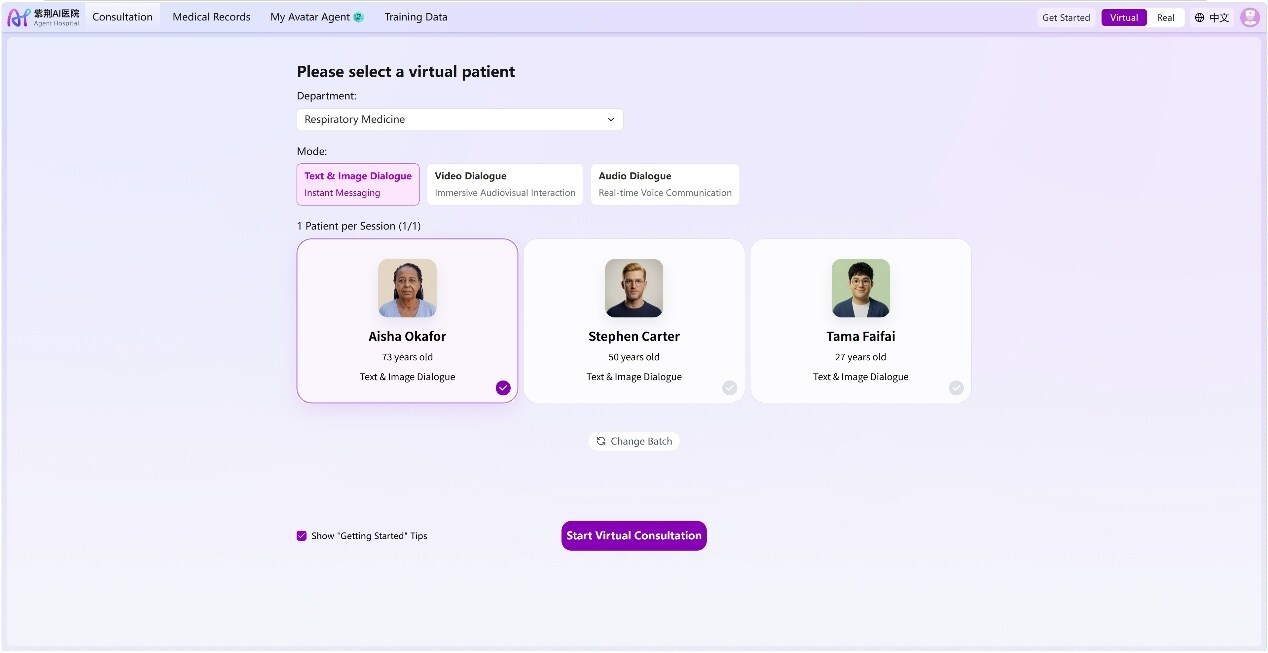
In the simulation phase, learners enter scenario-based exercises through an AI-driven video avatar. "It's akin to having a video call on the mobile phone with someone in distress," Pang said. The avatar presents cases involving anxiety, grief, or stress, and learners respond in real time to demonstrate the core PFA steps: Look (recognising signs of distress), Listen (showing empathy and providing supportive, non-judgmental attention), and Link (offering reassurance and connecting the individual to appropriate help).
During each simulation, the system analyses the learner’s verbal responses and prompts the avatar to react accordingly, which creates an immersive, conversational exchange. The app’s built-in assessments and AI-driven feedback mechanisms evaluate how well learners apply core PFA principles, tracking their progress and identifying specific skills that need refinement.
Pang emphasised that learner responses are used solely for training purposes, with data securely stored and protected under NTU’s data policies and the Personal Data Protection Act.
WHY IT MATTERS
NTU shifted to a digital, AI-enabled model of PFA training to make it more accessible and scalable for its community of 47,000 students and staff.
While the university’s classroom-based workshops, first introduced in 2022, proved both effective and popular, they were limited by time, space, and scheduling. Each in-person session lasted a full day and could only accommodate about 30 participants, making large-scale training difficult to sustain, Pang explained.
Conventional e-learning could deliver theoretical knowledge but fell short in developing and assessing interpersonal skills. The university's new mobile learning app bridges that gap by allowing learners to practise support techniques anytime, receive AI-generated, scenario-specific feedback, and engage with simulations tailored to NTU’s campus context. By monitoring competency and retention over time, the platform supports continuous improvement and builds learners’ confidence in providing PFA, Pang added.
This reflective feedback process reinforces learning and allows users to practise and refine their PFA responses "in a safe, self-paced, yet realistic environment before applying the skills in real-life situations," he said.
If the university's annual Student Experience Survey is any indication, the app-based training has already made a measurable difference. Results have shown encouraging signs of greater awareness of wellbeing and stronger confidence in both peer support and support from staff or faculty.
"To me, I felt like they were trial runs for situations that could happen in real life," said Avril Leong, a communications student who completed the app-based PFA training. "The AI simulations gave responses you would expect to hear from an average person, so it felt quite realistic."
"Of course, AI has its limitations and can't fully replicate a real-life situation," she added. "But it's realistic enough to help you understand when and how to apply what you've learned if you find yourself in a similar scenario."
Leong noted that each situation is unique and that learners should use the AI's feedback as guidance, not a prescription. "It’s important to understand that what works for every person is going to be different," she said. "What the AI approves isn't the 'end all, be all' answer to PFA. It's about assessing the situation and deciding what's the best course of action from there."
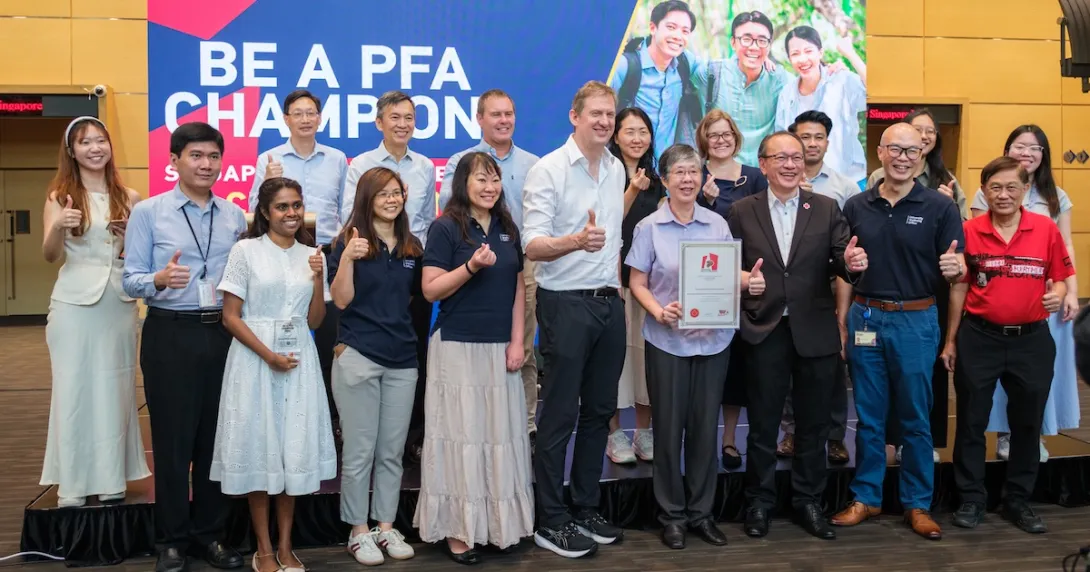
Since April last year, more than 3,000 individuals have undergone PFA training through the mobile app. The self-paced programme can typically be completed in two to three hours, either in one sitting or across multiple sessions, according to Pang. Between August and October, NTU trained its largest group yet – 232 students and staff – earning recognition from the Singapore Book of Records.
NTU is now looking to expand the PFA app's reach beyond the campus, with plans underway for potential commercialisation and wider adoption across universities, workplaces, and community settings in Singapore and abroad.
ON THE RECORD
"As a volunteer with NTU’s The Wellbeing Collective, a student-led volunteer organisation for wellbeing, I felt that PFA training could equip me with the skills and knowledge to better serve not only the NTU community but also my loved ones. After obtaining the certification, I feel more confident about supporting people who may be experiencing mental distress. Beyond helping someone through a mental health crisis – as one would expect with PFA – the training has also taught me to have better conversations with my friends, even if it’s just everyday chitchat to catch up with each other," Leong told this publication in an email interview.