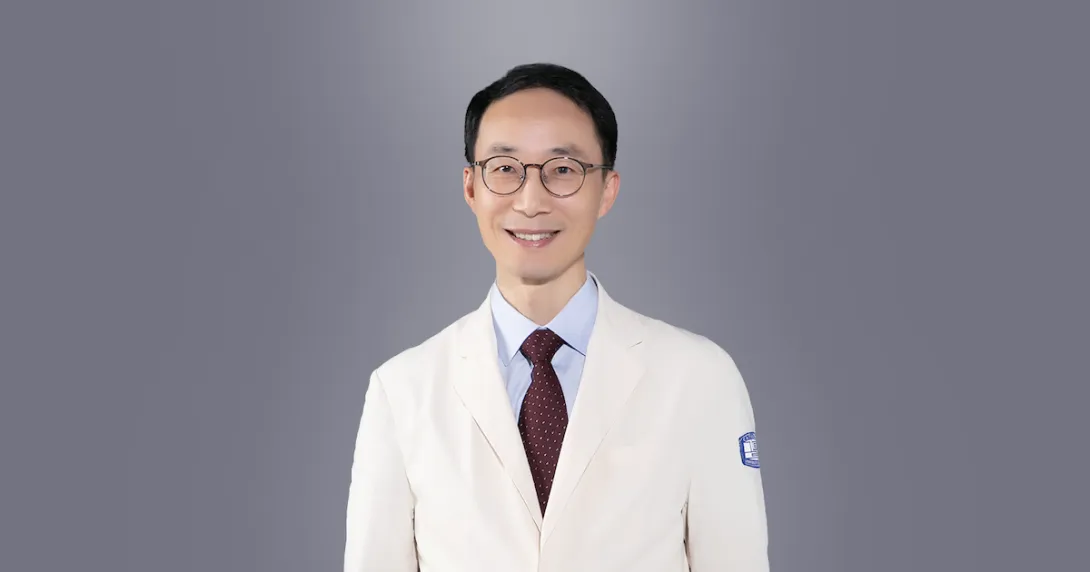
Dr Chan Kwon Jung, Professor, Department of Pathology, Director, Biobank, Smart Hospital
Seoul St. Mary's Hospital, Catholic Medical Center, Catholic University of Korea
South Korea
Photo courtesy of the Catholic Medical Center
Large language models are increasingly emerging as a foundational layer in hospital digital transformation in South Korea. However, to further translate AI's potential into routine clinical practice, stronger national policy, reimbursement, and infrastructure support might be necessary.
Recently, Seoul St. Mary's Hospital, flagship hospital of the Catholic Medical Center (CMC) of the Catholic University of Korea, began piloting CMC GenNote, an LLM-based clinical documentation system developed with PuzzleAI. The AI scribe is the first of many AI-driven innovations planned across one of the country's largest private non-profit healthcare networks.
The deployment is part of a smart hospital strategy at Seoul St. Mary's that treats LLMs not as standalone tools but as core infrastructure for reshaping clinical, operational, and research workflows – from documentation and diagnostics to nursing, pharmacy, and patient engagement – under a tightly governed, on-premise AI environment.
Healthcare IT News caught up with Professor Chan Kwon Jung, director of Smart Hospital and Biobank at Seoul St. Mary's Hospital, to discuss how CMC is scaling LLM-based systems across its hospitals, governing AI risks in clinical settings, and why they believe government backing will be critical for AI scribes and smart hospital models to become standard practice nationwide.
Q. CMC recently introduced its AI scribe, CMC GenNote. What clinical, operational, or documentation gaps in your existing voice-based EMR system led to the development of the tool, and how does the new system fundamentally change documentation workflows for clinicians?
A. Seoul St. Mary’s Hospital has operated a voice EMR system since 2019. This system was developed using speech-to-text (STT) technology capable of accurately transcribing complex spoken content that includes a mixture of Korean, English, and medical terminology. It has been used effectively in areas such as radiology reporting and the creation of operative notes in operating rooms and procedure suites.
However, the existing voice EMR system was fundamentally limited to basic speech transcription. It lacked the ability to comprehend the semantic context of multi-party clinical conversations and to summarise and organise content according to structured medical record templates. As a result, clinicians still faced a significant burden in revising and reorganising documentation, which limited the scalability of the system across diverse clinical settings.
To overcome these limitations, we introduced CMC GenNote, an LLM-based clinical documentation solution. In addition to STT, GenNote leverages LLM technology to understand and summarise conversational context, automatically retrieve appropriate EMR templates, and generate structured clinical notes aligned with specific documentation fields. Through this transformation, clinicians have been able to dramatically reduce repetitive and manual documentation tasks, shifting their role from primary content creation to review and final validation. This has allowed them to reclaim time for direct patient interaction and focus more fully on clinical care.
Q. How does the AI scribe figure in your network's ongoing smart hospital transition? How far along are you in this journey, and what milestones/progress status can you share?
A. As part of its AI transformation, the Smart Hospital at Seoul St. Mary's Hospital – a specialised hospital dedicated to digital and AI-driven healthcare innovation – has led the adoption of a healthcare AI transition strategy aimed at reducing clinician workload and strengthening patient-centred care. The AI scribe represents the first tangible outcome of this strategy and a clear example of how AI transformation can deliver meaningful improvements in real-world clinical environments.
Currently, CMC GenNote is being piloted across all outpatient clinics, with plans to expand its deployment in phases to operating rooms, emergency departments, and inpatient wards.
Q. Beyond clinical documentation, how is CMC applying LLMs across its Smart Hospital strategy, and what actual LLM-based tools are being built or piloted today in such areas as clinical decision support, care coordination, patient communication, research, or operational workflows?
A. We view the adoption of LLMs not as a tool limited to drafting medical records, but as a foundational starting point for transforming hospital-wide workflows through AI. Accordingly, we are actively evaluating and implementing AI-driven transformation initiatives across all functional areas of the hospital in a phased and systematic manner.
At Seoul St. Mary's Hospital, LLM-based technologies are already being applied or actively pursued in a wide range of domains, including template-adaptive clinical note generation based on consultation content, automated generation of imaging and diagnostic reports, operative note creation in operating rooms, clinical information summarisation, nursing documentation support, pharmacy dispensing assistance, patient consultation chatbots, post-discharge patient management, and EMR-based natural language query and search systems.
Q. How are you governing the use of LLM-based tools across the network, particularly around data privacy, model validation, hallucination risks, and clinician accountability, as these systems become more embedded in care workflows?
A. Seoul St. Mary's Hospital operates AI models entirely within a closed, on-premise hospital infrastructure to prevent data leakage. We have also implemented integrated security controls for EMR connectivity, along with monitoring and validation frameworks designed to minimise contextual errors and hallucinations.
Importantly, our workflows are designed to ensure that final clinical judgment and accountability always remain with healthcare professionals. AI outputs serve as decision-support or documentation aids, not as autonomous clinical decision-makers.
AI systems cannot be effectively governed through traditional hospital operational structures alone. Recognising this, we are pursuing specialised consulting to establish a dedicated AI governance framework – one that addresses ethics, regulation, clinical guidelines, and infrastructure operations while actively advancing AI transformation. Through this approach, we aim to lead a safe, responsible, and innovative AI-driven transformation across the organisation.
Q. Is CMC GenNote intended to become a standardised platform across the CMC network, and what technical or organisational challenges must be resolved to scale LLM-based tools across multiple hospitals and specialities?
A. CMC GenNote has strong potential to be expanded beyond Seoul St. Mary's Hospital to become a standardised platform across the broader CMC hospital network. However, successful scaling requires more than technical maturity alone. Clinician adoption, AI-ready infrastructure environments, and standardised AI operational frameworks must all be firmly in place. Because each hospital differs in clinical practice patterns, AI infrastructure readiness, and workflow design, tailored optimisation and continuous feedback-driven refinement are essential.
CMC GenNote is currently being piloted at Seoul St. Mary's Hospital, as well as at Uijeongbu St. Mary's Hospital and Eunpyeong St. Mary's Hospital, which are part of the CMC hospital network. Insights gained from these pilots are being used to refine deployment strategies and improve clinician adoption across diverse environments.
Scaling LLM-based tools is not simply a matter of software deployment; it represents a broader AI-driven transformation of hospital systems. As such, infrastructure readiness and governance frameworks must be established as prerequisites at each participating institution.
Q. From the group's perspective, what needs to change at the national level (e.g., policy, reimbursement, certification, or clinical guidelines) for AI scribes and other LLM-based tools to become standard practice in South Korea's health system?
A. For AI scribes and other LLM-based tools to become routine components of clinical practice in South Korea, a strong institutional and policy foundation is essential. This includes clear, actionable national guidelines and legal frameworks for LLM-based medical solutions, as well as appropriate reimbursement and compensation models, and well-defined performance and safety certification standards.
Moreover, implementing AI systems, including LLMs, requires substantial investment in infrastructure and highly specialised AI expertise. Given that Korean hospitals operate largely as non-profit institutions, effective national support is critical. Government-led standard guidelines, expanded national R&D programs, and meaningful financial and policy incentives will be necessary to enable efficient and sustainable AI transformation across the healthcare system.
Q. Finally, looking ahead, what smart hospital initiatives or AI-driven projects are next in CMC's pipeline, and what timelines are you working toward for deployment?
A. In the near term, we are accelerating LLM-based AI transformation across core clinical workflows, including outpatient care, diagnostics, surgery, nursing, pharmacy operations, and patient communication. Over the longer term, we plan to extend AI capabilities into research domains, supporting data-driven study design, cohort construction, and EMR data extraction and preprocessing.
At the same time, we are planning to develop AI-driven clinical decision-support functions that provide analytical insights into treatment pathways and prognosis, while also aiming to significantly reduce administrative documentation across the organisation. To support the safe deployment of these systems, we are establishing a dedicated AI operations and governance structure and pursuing AI-tailored upgrades across medical information systems and IT infrastructure. Through these efforts, we aim to evolve into a truly patient-centred hospital powered by responsible and trustworthy AI.
_
Editor's note: Prof Jung's responses have been edited for brevity and clarity. Texts in italics are the interviewers' emphasis.