Photo courtesy of Samsung Medical Center
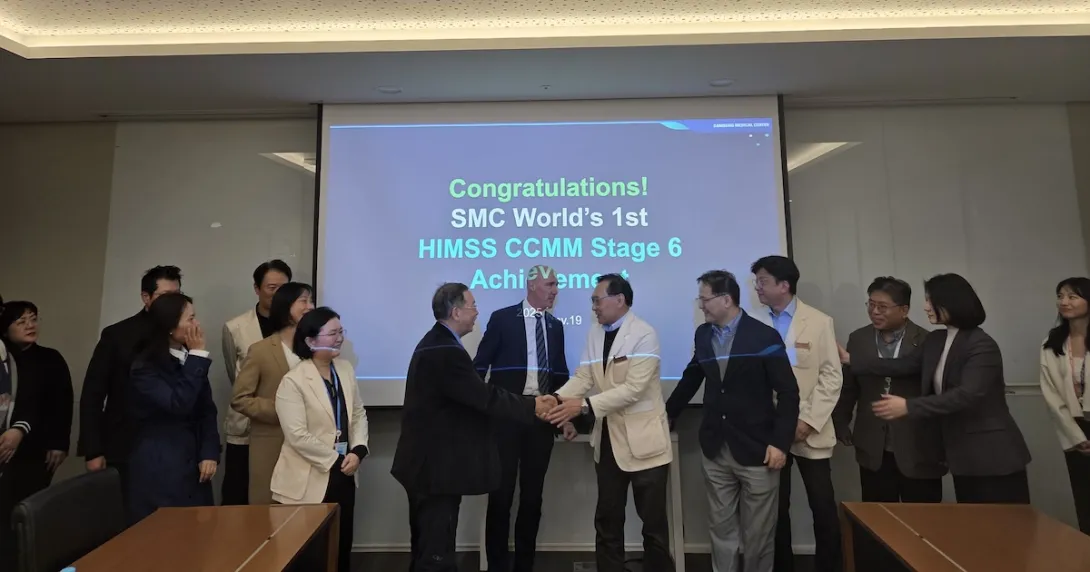
Samsung Medical Center, Icheon Medical Center, Samsung Seoul U Surgery Clinic, Seoul Samsung Internal Medicine Clinic, and Chamden Internal Medicine Clinic have been validated as the world's first to achieve Stage 6 of the HIMSS Continuity of Care Maturity Model (CCMM).
The eight-stage model assesses how effectively multiple providers within a community collaborate as a team to deliver integrated, patient-centred continuity of care.
How it began
The SMC Best Co-Caring Partners network comprises seven healthcare institutions, including community hospital Incheon Medical Center (IMC) and Samsung Seoul U Surgery Clinic, a specialist clinic, led by the tertiary hospital, Samsung Medical Center (SMC).
In an interview with Healthcare IT News, Dr Poong-Lyul Rhee, professor and head of SMC Office of Digital Transformation, said they initiated the digital collaboration model to address the lack of continuity in information exchange across many medical institutions.
"Information discontinuity across multiple institutions can pose serious risks to patient safety," he stressed.
Why get validated?
The network sought validation for Stage 6 CCMM to verify whether its digital collaboration model works effectively in actual clinical practice. "We chose to lead the CCMM validation to obtain formal international certification," said Prof Rhee.
"We also aimed to demonstrate that our collaborative model with national and regional healthcare providers could become a global standard for patient-centred continuity of care," he further explained.
"We sought … to demonstrate that a regional hospital can serve as a key contributor within a connected care ecosystem," Dr Moon-Hyung Lee, director of IMC, said on their end.
Dr Hawoo Yi, chief director of Samsung Seoul U Clinic, said he has long been interested in improving patient care processes through various research collaborations and national projects with SMC. "In fact, our clinic exchanges the largest number of cancer patients with SMC," he shared.
Meeting the challenge
According to Dr Rhee, the care network's biggest challenge was the lack of interoperability and aligning each institution under a unified standard and workflow.
"As a regional public hub hospital, it was also difficult to generate integrated analytic data, such as population-level statistics and treatment outcomes, in collaboration with government agencies and community organisations," added Dr Lee.
For Seoul U, the most challenging aspect of the CCMM validation preparation involved monitoring the continuity-of-care flow for breast cancer patients who were referred but did not follow through with their appointments. "Within the context of Korean culture and the healthcare delivery system, we must respect patients' privacy and their right to choose. Although we do conduct follow-up phone calls, it is difficult to track every case comprehensively," said Dr Yi.
The network standardised referral, return, and follow-up processes, with the Samsung Partners Portal, Korea's Health Information Exchange System, and the country's Health Insurance Review and Assessment (HIRA) Service as the core framework. Systems for image sharing were also optimised to allow clinicians to access patients' medical images. Data on clinical visits collated through the single PRISM portal and the integration of wearable devices were also foundational.
"We also aligned documentation formats and information exchange timelines across all organisations. Using real patient scenarios, we conducted iterative joint testing to ensure that all data circulated accurately in a closed-loop manner," added Dr Rhee.
During the CCMM assessment, several care transition gaps were identified, including inconsistent follow-up for returned patients and insufficient management of no-show or discontinued cases. The network expanded the definition of a "closed case" to require the completion of a follow-up, "which significantly reduced fragmentation during patient transitions," according to Dr Yang.
Process gaps were also discovered between partner institutions, which were addressed through monthly online seminars, where doctors share up-to-date clinical practices, on-site consulting, and regular inter-institutional meetings, where improvement needs were identified and shared standards were reinforced.
"The mutual trust and effective communication between SMC clinicians and those at IMC played a crucial foundational role," stressed Dr Lee. "Ongoing technical reviews with SMC were also instrumental in ensuring stable interoperability."
"In primary care settings, limited staffing and time constraints can make new documentation standards or procedures feel burdensome. However, by repeatedly practising with real patient scenarios, we were able to adapt naturally," Dr Yi shared.
Central to coordinating all these efforts was the SMC Partners Center (SPC). "We established an operational governance structure to streamline collaboration and decision-making across institutions. Through this preparation, we enabled all organisations to function as a single, integrated community of care," said Professor Ji-Hyuk Yang, head of the Cardiovascular Surgery Division and director of the SPC.
Outcomes
Dr Rhee revealed that after implementing the Stage 6 CCMM requirements, real-time data integration "significantly improved" clinical readiness. "Duplicate testing decreased, patient wait times were reduced, and overall operational efficiency improved. With [continuous glucose monitoring data], heart rate, sleep, and other daily data integrated into the EMR, more personalised and precise care became possible."
"Structured management of returned patients also reduced unnecessary repetition and improved the patient experience," claimed Dr Rhee. "Uncertainty during subsequent patient management has been significantly reduced," added Dr Lee.
Dr Rhee said the validation process reminded clinicians of the importance of addressing information gaps throughout the care journey and prompted them to reevaluate existing information-sharing practices and strengthen end-to-end care processes.
"Through the validation, we gained a deeper understanding of the challenges faced by community providers," he said.
IMC noted faster retrieval of patient information after treatment at a tertiary hospital, enabling easier follow-up care planning, as well as shortened and more accurate referral return processing time.
"For emergency and critical-care patients, post-transfer status tracking has become easier, and for those with chronic conditions, a stronger foundation has been established to ensure continuity in treatment planning. Notably, patients and caregivers now find it easier to understand how far their treatment has progressed, which represents a meaningful improvement in overall patient experience," shared Dr Lee.
At Seoul U, said Dr Yi, when patients returned after receiving care at a tertiary hospital, "the clear and structured return information significantly improved both the accuracy and speed of our clinical decision-making."
"We also received feedback that the quality of our referral information had improved, enabling the tertiary hospital to understand patient cases more quickly. Most importantly, patients experienced reduced anxiety about where they received care and what information they needed to communicate."
THE LARGER TREND
The Stage 6 CCMM validation adds to SMC's digital maturity laurels; the hospital has been validated at the highest stages of the HIMSS Digital Imaging, Electronic Medical Record, and Infrastructure Adoption Models, and ranked first in the 2022 global HIMSS Digital Health Indicator.
The CCMM is primarily developed to provide insights for central and local governments in their policy-making for coordinated care within a particular community and across multiple care settings. Currently, it is being utilised by the Australian Digital Health Agency to evaluate the digital health maturity and continuity of care within selected care communities. The Government of Jersey in Europe was also the first to use the CCMM for a national health system assessment. The CCMM has been utilised in nearly 30 countries.
Following their Stage 6 validation, the SMC-led network, according to Dr Rhee, now plans to implement the API-driven Proactive Integration Mechanism by 2026 to achieve "fully automated, real-time data exchange" across institutions. It will also be refining key performance indicators to monitor the full patient journey, including no-show and discontinued cases, improving follow-up standards accordingly, and expanding partnerships to advance its continuity of care model.
"We also intend to strengthen functions that help identify and appropriately manage patients who drop out of the continuous care pathway," added Dr Yi.
On its end, IMC will also develop regional chronic disease management pathways, integrate monitoring for high-risk patients, and establish a public health-based data analytics framework.
ON THE RECORD

Professor, Head of Office of Digital Transformation
Samsung Medical Center (SMC)
"Achieving CCMM Stage 6 as the world's first multi-institution validation proves that multiple healthcare providers can function as a single, integrated ecosystem to deliver truly continuous, patient-centred care. This milestone sets a new benchmark for how a tertiary hospital should lead a digitally enabled model of coordinated care.
HIMSS recognised the strength of our bidirectional care delivery system, supported by the Samsung Partners Portal, health information exchange, and HIRA integration. They also highlighted the advanced implementation of PRISM, which unifies clinical data across pre-visit, intra-visit, and post-visit phases. Another key factor was our ability to integrate continuous glucose monitors, smartwatches, and other wearable data directly into the EMR, enabling real-time insight into patients' daily health.
These capabilities significantly reduced care fragmentation and enhanced patient safety across institutions. Ultimately, this validation affirms SMC's leadership in establishing a nationwide, uninterrupted model of coordinated care."
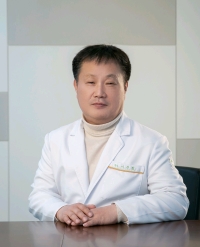
Hospital Director
Icheon Medical Center (IMC)
"Achieving CCMM Stage 6 formally recognises Icheon Medical Center as a key regional hub hospital that ensures stable and continuous care transitions for patients within the community. Regional public hospitals frequently coordinate care for a wide range of patients — including those with acute and chronic diseases, emergency cases, and vulnerable populations — with tertiary hospitals. Through this validation, we received international confirmation that these processes are now being managed under clearer standards and structured procedures.
Importantly, a system has been established to prevent information gaps or discontinuities as community patients move between tertiary hospitals and public hospitals — a significant milestone.
By achieving a level of interoperability equivalent to that of large hospitals and specialty clinics, IMC is now able to provide safer and more continuous care experiences for local residents."
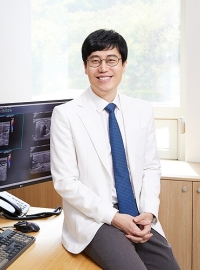
Surgeon, Chief Director
Samsung Seoul U Clinic
"For Samsung Seoul U Surgery Clinic, participating in the CCMM Stage 6 assessment and contributing to the establishment of a world's first model is a significant achievement that officially recognises that primary clinics can attain the same level of information connectivity and patient-centred continuity of care as tertiary hospitals.
This validation confirms that when patients move between large hospitals and primary care clinics, their care can continue seamlessly without information gaps. It also establishes a foundation for primary care providers to play an even greater role as both the starting point and the final stage of community-based healthcare."