Photo: Ted Horowitz/Getty Images
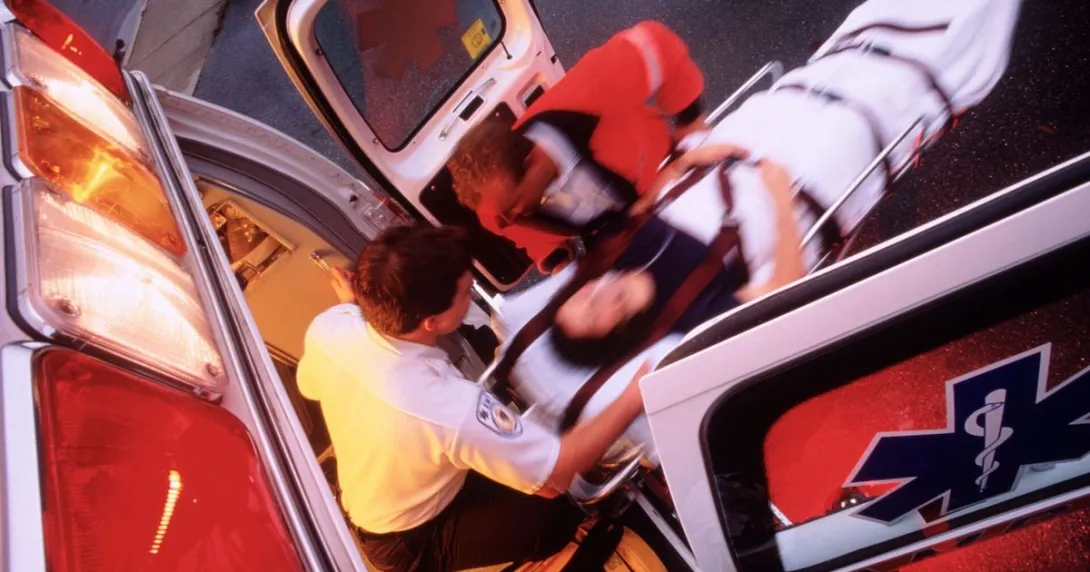
At least 10 AI models power a new ambulance platform in South Korea, supporting paramedics' documentation and faster hospital transfers.
A research team at Yonsei University Severance Hospital recently introduced a prototype of an "Intelligence Emergency Activity Support Platform."
Based on a press release, the prototype, which represents the first phase of an R&D project with South Korea's National Fire Agency, incorporates 10 AI models to enable four key functions:
- voice-based conversion of emergency dialogue into structured clinical records;
- prediction of patient deterioration and on-scene risk assessment;
- pre-triage severity scoring using ambulance CCTV before ER intake; and
- decision support for treatment guidance and transfer hospital selection.
Paramedics graded the platform 86 out of 100 in overall satisfaction during a recent field testing, noting that the hospital transfer recommendation feature was useful as a reference for real-world decision-making.
The project is now entering its second phase, during which the research team will quantitatively verify response speed and workload reduction, and measure communication accuracy and system stability in real-world settings.
WHY IT MATTERS
Severance Hospital noted how emergency responders can easily miss the golden hour when they must assess vital signs, locate hospitals that can receive patients, and transmit critical information all at once. Documentation completed from memory also risks missing crucial details.
The AI-powered ambulance platform aims to bring efficiencies in emergency coordination by enabling rapid communication between ambulance crews and emergency department clinicians, while reducing reporting burden.
"The ultimate goal is to increase the efficiency of emergency rescue activities in ambulances and to quickly transmit records of patient conditions to the appropriate emergency room doctors, thereby improving patient survival rates," said Yonsei professor Jang Hyuk-jae, who leads the research team.
The Electronics and Telecommunications Research Institute (ETRI) and the Korea Electronics Technology Institute (KETI) also participated in this project.
THE LARGER CONTEXT
After 20 months under the "serious" national medical crisis alert, the South Korean government lifted the designation in October and began transitioning to long-term reforms in telemedicine and emergency care. These include a 30% cap on virtual consultations, the standardisation of emergency medical fee schedules, and structural reforms across tertiary and secondary hospitals. The serious alert had been raised following the mass resignation of junior doctors in February 2024.
Last year, the government also announced several AI initiatives to modernise emergency care, including two AI-based systems for patient classification and transfer under the Korean Advanced Research Projects Agency for Health, as well as a clinical decision support system for emergency departments valued at more than $15 million.
In September, the Ministry of Health and Welfare piloted the Emergency Smart app, which uses a symptom classification system to direct patients to emergency rooms for severe cases or nearby clinics for minor conditions, while also providing real-time facility information.