Photo courtesy of Gushengtang
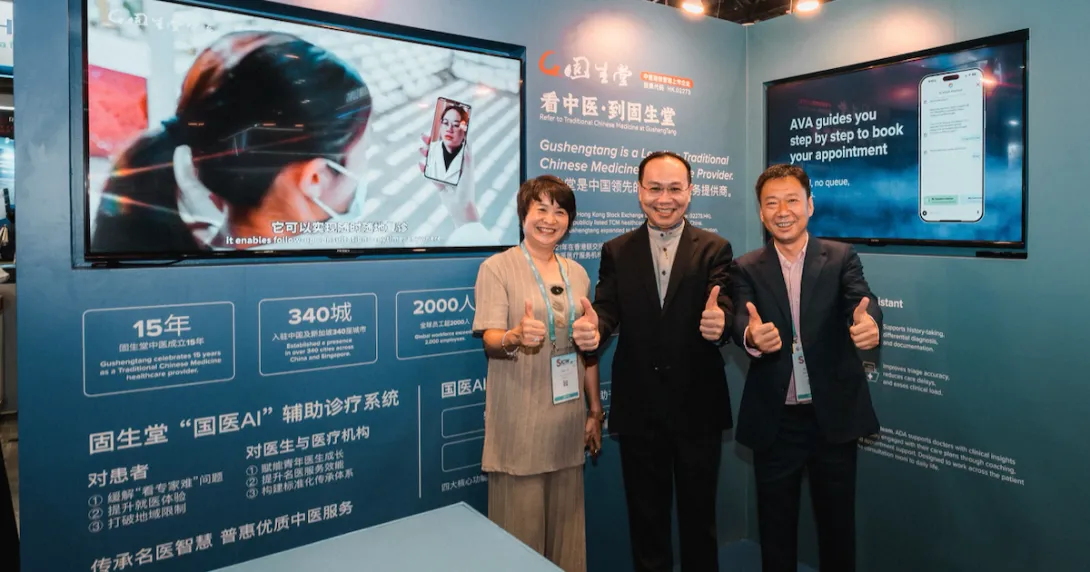
Gushengtang, a Hong Kong-listed chain of traditional Chinese medicine clinics and hospitals, is planning to establish an internet hospital ecosystem based on its recently unveiled foundational AI model.
The company, which runs 80 clinics and hospitals in China and Singapore, has developed the Master TCM AI, built on 30 years' worth of clinical experience data from 10 renowned specialists in traditional Chinese medicine. It covers eight core specialties, including oncology, dermatology, gastroenterology, otolaryngology, andrology, psychology and sleep medicine, classical formula medicine, and orthopaedics.
HOW IT WORKS
To build the AI, Gushengtang tapped traditional Chinese medicine specialists with more than 30 years of clinical diagnosis and treatment experience, strong patient reputation, and recognised influence in key traditional Chinese medicine specialties. Each expert contributed over 5,000 historical cases, 300 representative cases, 100 diagnostic and treatment approaches for major diseases, and 100 patient efficacy feedback records, providing a robust dataset for training and refining the AI model.
"We gathered experts' years of digital and paper data, and through the automated data processing pipeline of 'collection-cleaning-transformation-synthesis-quality control,' converted multi-source heterogeneous data into high-quality, standardised training data," Gushengtang CTO Hu Zhongkai told Healthcare IT News.
The resulting foundational AI model can "quickly parse" these multimodal data and construct intelligent models with diagnostic thinking and syndrome differentiation logic.
As traditional Chinese medicine is a highly subjective practice, Gushengtang's team of AI developers had to quantify experts' experience using massive clinical data, identify stable and reproducible patterns, and incorporate feedback from the specialists into a closed-loop optimisation process. "This is a 'limited intervention' process that ensures the AI's learning direction always remains consistent with the expert's core experience," Hu stressed.
How the company verifies the consistency between the AI’s recommendations and expert decisions is by following a comprehensive process that includes data governance, model training, performance evaluation, expert feedback, and engineering optimisation.
"Currently, the Master TCM AI Avatar has achieved over 86% consistency in expert simulation, and both diagnostic accuracy and prescription rationality have been highly praised by the experts themselves," shared Hu.
The AI avatar is continuously refined with the help of traditional Chinese medicine specialists, who review its decisions and outputs and provide feedback to guide model optimisation.
The TCM AI avatar is now in commercial use, primarily supporting online follow-up consultations. One of its popular deployments features an avatar modelled after Dr Li Hao, a renowned traditional Chinese medicine practitioner from Guangdong Province, which follows a human-machine collaboration model.
The avatar supports five stages of a traditional follow-up workflow. It begins with condition collection, where the AI mimics a physician’s questioning style to refine symptom details through dynamic, adaptive prompts. This is followed by medical record generation, which automatically converts patient dialogue into structured electronic records, doing away with manual entry and reducing the risk of error.
Next, the system conducts assisted syndrome differentiation, analysing clinical data to recommend likely diagnoses, syndrome types, and even corresponding Western medical interpretations. The AI then recommends Chinese medicine prescriptions, including compatibility and dosage, tailored to the patient. In the post-diagnosis phase, the AI tracks patient progress, prompts patient check-ins, and suggests treatment adjustments to support continuous care.
WHY IT MATTERS
Citing feedback from traditional Chinese medicine practitioners, Gushengtang said their AI assistant can help free up more time for practitioners, with one doctor reporting an average of six minutes spent on diagnosis and treatment decisions during online consultations.
Besides supporting diagnosis and treatment decisions, the company said the AI can also aid the development of traditional Chinese medicine education by helping to pass on knowledge and approaches of established practitioners to students. Gushengtang emphasised that using the AI helps young traditional Chinese medicine practitioners shorten their learning curve toward independent practice. "It allows them to train through simulated consultations and receive instant guidance based on senior experts’ experience."
Gushengtang is preparing a pilot deployment of its AI system in Singapore in partnership with 1doc, the training arm of the fin-medtech company iAPPS Health Group. It also plans to onboard more traditional Chinese medicine experts in core specialties and expand to other adjacent fields, such as gynaecology and paediatrics.
These efforts, according to Gushengtang, align with its broader goal of building an "AI internet TCM hospital ecosystem" that supports care from birth to end of life, with human-machine collaboration at its core.
THE LARGER TREND
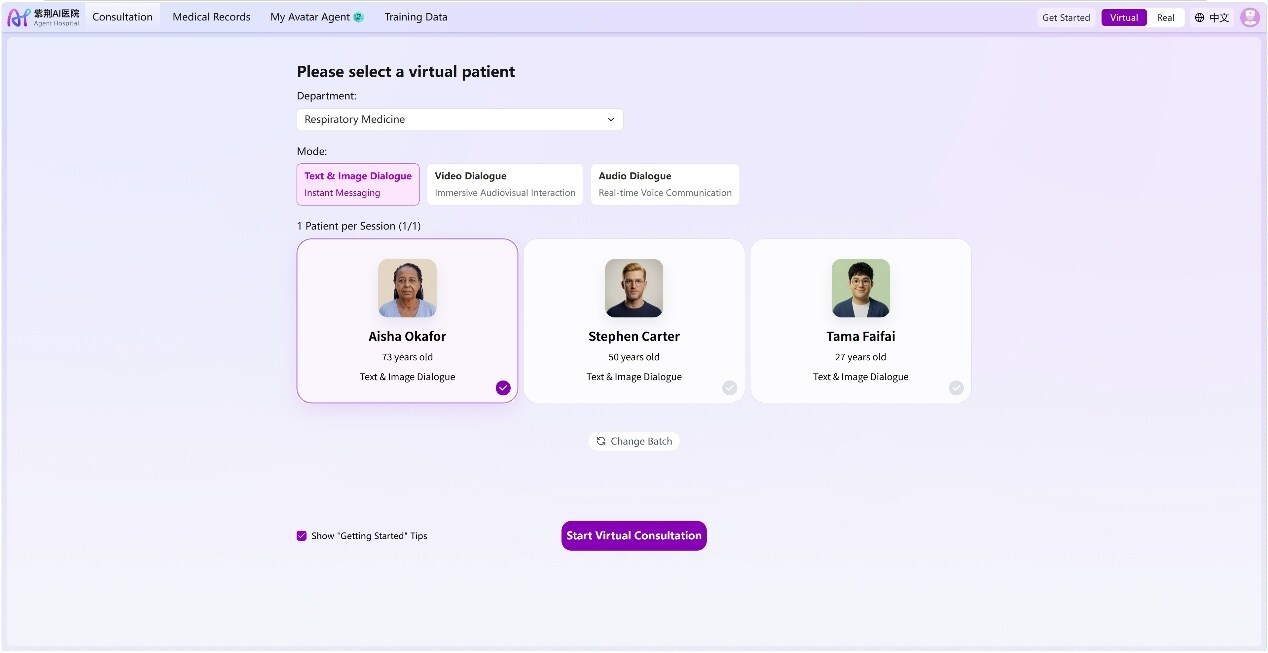
Gushengtang joins a growing list of institutions building internet hospital ecosystems, a telemedicine model unique to China's health system. Early this year, Shanghai-based Ping An Health introduced a generative AI chatbot on its mobile health app, Ping An Xin Yi, featuring digital avatars of real physicians that provide 24/7 AI-assisted consultations, medical report interpretation, and medication reminders. Tsinghua University is also developing what could be the world's first autonomous and self-evolving virtual hospital concept, which also features AI avatars of real doctors, along with nurses and patients.
These developments support China's push toward smart Chinese medicine, a national strategy to digitise traditional healthcare practices. Some of the priorities outlined in the government's 14th Five-Year Plan (2021–2025) were the integration of Chinese medicine with the internet and the construction of a Chinese Medicine Hospital Health Information Platform.
Meanwhile, PomDoctor, a Chinese internet hospital specialised in chronic diseases, has recently debuted on the Nasdaq following a $20 million IPO.
ON THE RECORD
In a statement sent to this publication, Dr Li Hao explained what he thinks of his AI avatar: "My AI avatar can systematically and comprehensively collect condition information and provide clear and effective summary analyses. I only need an average of about six minutes focused on core decision-making to complete online diagnosis and treatment. It does not simply match symptoms and prescriptions, but completely learns and applies my core thinking in the diagnostic process, such as condition inquiry and syndrome differentiation and treatment."
He also noted that the AI's syndrome differentiation logic is "highly consistent" with his thinking, which allows him to focus on making final decisions.
For him, the AI helps in making his expertise in traditional Chinese medicine "inheritable, replicable, and promotable." "Not only can it help me serve more patients, but it also serves as a 'living textbook' for young doctors to learn and help them master the diagnostic thinking of renowned doctors."
The AI, he further said, has "profound significance" in addressing challenges in passing on traditional Chinese medicine techniques and promoting its development.
_
Editor’s note: Responses from Gushengtang CTO Hu and Dr Li have been edited for clarity and brevity.