Videos
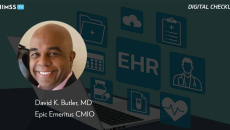
Dr. David K. Butler, who also serves as clinical informatics leader at Calyx Partners where he mentors CMIOs, advises CIOs and other health IT leaders at provider organizations on important elements of these two key EHR processes.

The collaboration aims to develop new interventional labs to support patients in Indiana, say Dr. Atul Gupta, CMO of diagnosis and treatment at Philips, and Kevin Roesch, assistant VP of cardiology and imaging services for Methodist Hospitals.

Dr. Jonah Feldman, medical director for clinical transformation and informatics at NYU Langone, talks about how AI agents can expand physicians' capabilities, allowing them to be more focused on care delivery.
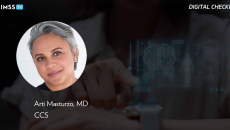
The HHS Secretary has called for Americans to wear government-issued health monitoring devices. Dr. Arti Masturzo, chief medical officer at CCS, a provider of collaborative care programs and home-delivered medical supplies, offers thoughts.

Wipfli Healthcare Industry Leader Kelly Arduino says to collect all the money they're owed, hospitals should ensure they have proper coding and pricing for services and look for community funding.

Dr. Ethan Goh, executive director of Stanford ARISE, the AI Research and Science Evaluation Network, describes a new study to explore models' diagnostic and management reasoning capabilities – and what that could mean for clinicians and patients.

Robin Glass, president of Included Health, says artificial intelligence has improved cost estimation tools and helps to address patient care gaps, while telehealth access reduces total costs for employee groups.

Prior auth can be completed in 30 seconds using coordination between the physician, PBM and EHR, says Surescripts VP of product innovation Matt Koehler. The company presented the scenario at AHIP 2025.

HIMSS25 APAC
Chi Mei Medical Center in Taiwan has a high staff acceptance rate of generative AI-powered tools, says Dr Chia-Te Liao, director of the Center for Evidence-based Medicine & Health Policy at the hospital.
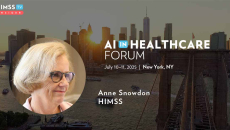
HIMSS Chief Scientific Research Officer Anne Snowdon says there are "thousands of reasons" AI tools are more readily adopted in other industries. But the biggest is that lives are at stake in healthcare. "We don't ever take that for granted."