Videos

According to Hyland Healthcare's Michael Burke, strategic vendor partnerships, data orchestration and standards can help hospitals ensure that patient records are accessible, accurate and ready for AI-enabled healthcare delivery.

Jeff Elton of ConcertAI says health tech companies can anticipate the logic of generative artificial intelligence using knowledge graphs, like the FDA's Elsa, when submitting product reviews, and improve their output accuracy.

Data management basics are too often lacking, and policy regs still evolving, says cybersecurity strategist Richard Staynings. Whether dealing with automated decision support or adversarial deepfakes, healthcare orgs need both.

The event serves as a global platform to learn and connect about information and technology successes and challenges, say HIMSS President & CEO Hal Wolf and Peter Hall, Informa Markets president of Middle East, India, Türkiye & Africa.
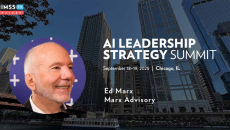
With more patients using artificial intelligence on their own to help with self-diagnosis, treatment and more, health systems that don't offer new services could see revenue erode, says Ed Marx, longtime healthcare CIO, author and advisor.
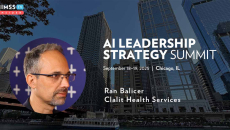
Reality has not caught up to the promise of AI, says Ran Balicer of Israel's Clalit Health Services. Scaling pilots requires leadership backing, clinician buy-in, cybersecurity action and strategic alignment, Balicer explains.

At the new C-suite-focused event, held earlier this month in Chicago, attendees spoke about the unique conversations they've had with each other, and about the successes and challenges of deploying artificial intelligence in healthcare.
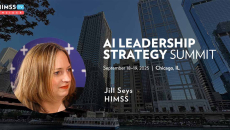
Successful AI adoption starts with choosing leaders who will champion the technology and engage their frontline teams to use the tools and provide feedback, says HIMSS digital health strategist Jill Seys.

Rosha Pokharel, CEO and founder of SolvDat, says it's key to consider the business case, the feasibility to build as it relates to data and adoption and, thirdly, whether you have the right skills and team in place.
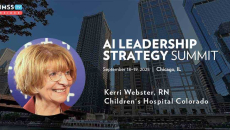
The health system is finding success with predictive models and LLMs and is "eager to understand and leverage" more advanced use cases, while ensuring they're "safe, secure, ethical and unbiased," says Chief Analytics Officer Kerri Webster, RN.