Workflow
SPONSORED
 |
04:46 pm |
August 13, 2024
|
04:46 pm |
August 13, 2024
|
04:46 pm |
August 13, 2024
While patients expect personalized and convenient experiences from their healthcare providers, clinicians need access to patient data and clinical decision support to accommodate greater patient volumes and mitigate workforce shortages.
While most healthcare organizations (HCOs) have processes in place around contract creation, procurement and onboarding, these processes are generally manual, costly and time-consuming. This results in visibility gaps that increase the likelihood of errors, omissions or contract delays.

SPONSORED
 |
03:17 pm |
August 13, 2024
|
03:17 pm |
August 13, 2024
|
03:17 pm |
August 13, 2024
Across industries, IT leaders’ top priorities include eliminating unnecessary expenses, boosting efficiency and generating revenue through improved customer experiences. Implementing a unified communications platform like RingCentral’s can help businesses modernize their practices and realize these goals.

SPONSORED
|
03:15 pm |
August 13, 2024
|
03:15 pm |
August 13, 2024
According to a Forrester report, RingCentral’s unified communications as a service (UCaaS) and contact center as a service (CCaaS) solutions result in improved customer experiences and cost savings for businesses. In addition, the study found that businesses using integrated UCaaS and CCaaS platforms benefited more compared to those that used separate unified communications and contact center platforms.
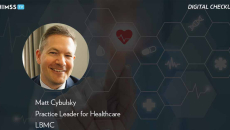
What are the trends in digital health implementation across health systems, and what needs to be considered when applying AI for value-based care? Matt Cybulsky, LBMC practice leader for healthcare AI, value-based care and product innovation, discusses.

Data interoperability supports population health and enhanced care delivery for healthcare organizations (HCOs). However, interoperability can also foster data exchange in use cases outside the health system’s facilities.

A prehospital health information exchange in Michigan that provides bidirectional interoperability will bridge ambulatory data gaps and enhance care coordination en route to the hospital and during post-discharge care transitions.

Adding long-range healthcare drones into prescription delivery and lab services, along with supporting health-at-home programs, can reduce care costs and delays, and improve patient experiences, says Keenan Wyrobek, cofounder of Zipline.

Prolonged understaffing in clinical laboratories threatens to compromise patient care, but deployment of automation and artificial intelligence technologies could offer a lifeline to burned out lab workers.