Precision Medicine
Innovation
Artificial intelligence will also continue to be a big focus, as it becomes more clear which startups are succeeding in their initial target sectors. VCs are also eyeing genomics analytics tools, as well as other more practical technologies.
“This is a big step forward in personalizing cancer treatment and ensuring better patient outcomes,” said Professor Lim Chwee Teck, Mechanobiology Institute, NUS Biomedical Engineering.
Masimo, the maker of monitoring technologies and connectivity tools for hospitals, announced this week that it will acquire the connected care assets of NantHealth for $47.
The findings suggest AI systems can be trained to detect and grade cancer in prostate needle biopsy samples with an accuracy rate equal to that of prostate pathology experts.
Innovation
Three experts from different areas of the health IT field discuss how artificial intelligence is going to play a larger role in the year ahead.
Cloud Computing
A study published in Nature suggests its model was able to spot cancer in de-identified screening mammograms with fewer false positives and false negatives than experts.
The pharma company will work with MIT's School of Engineering to establish an education program focused on developing new machine learning approaches to drug development and more.
BioLabs@NYU Langone, billed as the largest of its kind in New York City, will house more than 35 early-stage biotechnology and life sciences companies and 160 scientists and staff.
The center will use precision genomics to discover, address and treat genetic diseases, many of which affect infants and children and can cause life-long disability.
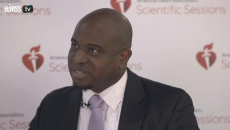
Azizi Seixas, with the Department of Population Health and the Center for Healthful Behavior Change at NYU School of Medicine, talks about using risk assessment tools to close the health access gap.