Precision Medicine

The chief information officer of NGS offers predictions for 2023 and beyond: human-centered design, AI and automation, enhanced interoperability, using data to close gaps in care, precision medicine advancements and more.

The state's health department has approved the PreciseDx Breast Test lab test which uses artificial intelligence to improve cancer grading and risk categorization

Researchers applied algorithms to data from 200,000 intensive care unit stays at 208 hospitals to develop two models that could help clinicians assess patient risks and apply interventions.

SPONSORED
 |
10:00 am |
January 23, 2023
|
10:00 am |
January 23, 2023
|
10:00 am |
January 23, 2023
Improving health outcomes and reducing health inequities.
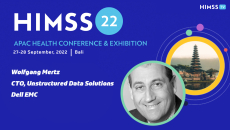
Wolfgang Mertz, CTO for Unstructured Data Solutions, says Dell Technologies is helping healthcare providers consolidate data – which enables easy access to precision medicine and supports cyber protection strategies.

Translational Research Institute for Space Health Chief Innovation Officer James Hury discusses collaboration and partnership opportunities, and highlights the group's programs that are most relevant to HIMSS members.

Health and technology innovators are studying astronauts' health to advance terrestrial healthcare. James Hury, deputy director and chief innovation officer at the Translational Research Institute for Space Health, explains how.

LA Children's received the funding to predict how critically ill children handle medication by applying machine learning to identify clinically significant patterns from the ICU data of 20,000 patients.

The federal precision medicine initiative aiming to study the DNA of 1 million volunteers has announced that it has begun returning personalized health-related DNA results to more than 155,000 participants.

Personalized medicine is constantly evolving, and the technologies it relies on are advancing rapidly. In this environment, the associated challenges are numerous and complex. Overcoming them often requires fresh eyes and multiple perspectives.