Government & Policy
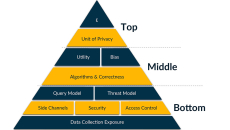
The National Institute of Standards and Technology created guidance for evaluating differential privacy algorithms that could allow data to be publicly released without revealing the individuals within the dataset.

Five QHINs have completed the onboarding process, according to ONC, and will now drive higher levels of healthcare information interoperability across the U.S.

This agency's first data breach settlement under HIPAA for a phishing attack involved the alleged failure to conduct a risk analysis to identify potential ePHI threats or vulnerabilities across the Lafourche Medical Group network.

The new public-private collaboration Insight Net is using advanced biosurveillance to respond to outbreaks and prevent future pandemics. Dylan George, director of the CDC's Center for Forecasting and Outbreak Analytics, explains more.

"The AHA cannot support proposals for mandatory cybersecurity requirements being levied on hospitals as if they were at fault for the success of hackers in perpetrating a crime," says Rick Pollack, president and CEO of the American Hospital Association.
AI can improve health equity, according to Dr. Michael Howell, chief clinical officer at Google, who will discuss the evolution of the company's medically tuned LLM and make regulatory recommendations for the use of AI in healthcare.

According to court documents and public reporting, Vladimir Dunaev provided specialized services and technical abilities in furtherance of the Trickbot scheme.

Thanks to a $2.4 million grant from the DoD, Rion is collaborating with the Mayo Clinic and the U.S. Army Medical Research Institute to study the company’s Exosome Product for service members. Dr. Atta Behfar, Rion CEO and cofounder, explains.

"When we see a vulnerability or intrusion campaign that could have been reasonably avoided if the software manufacturer had aligned to secure by design principles, we’ll call it out," writes CISA cybersecurity leaders Eric Goldstein and Bob Lord.