Government & Policy

The National Institutes of Health may seek as much as $200 million to acquire a new electronic health record that does not depend on institutional knowledge to maintain – and can handle continuous machine learning validation.

Reflecting on recent interoperability milestones, reasonable AI transparency and electronic case-reporting timelines, and TEFCA's FAST track to FHIR exchange, Micky Tripathi, ONC national coordinator, is candid about the year ahead.


Also, seven public medical centres in India will try out drone delivery of life-saving medicines and transfer of blood samples.

Amazon Web Services has concerns around AI use in healthcare and regulating the technology. But it can show the benefits of AI/ML in helping life sciences firms with drug development. Dr. Jared Saul, chief medical officer at AWS, discusses the issues.

Despite the hype, this buzzing AI will still have to prove its worth for Asia's cautious hospitals, says one health tech vendor.
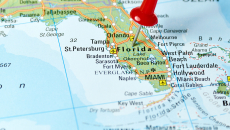
The Sunshine State's proposed law would shield governments and businesses against liability claims that result from a data breach that occurs during a cyberattack.

Also, South Korea's National Rehabilitation Center is opening up its resources to assist manufacturers in getting their rehabilitation medical devices approved.

Ahead of new enforceable standards, U.S. Health and Human Services has released voluntary cybersecurity performance goals to address the most significant cyberattack vectors hospitals and healthcare providers face.

The project's recognized coordinating entity has released a series of draft materials to support wider use of the HL7 spec, aiming to address standard operating procedures for electronic case reporting and improve the framework more generally.