Connected Health

Amy Tucker of Advocate Health's Sanger Heart & Vascular Institute explains what it takes to move to a scalable platform that improves clinical administration and patient care.

The guidance allows for different levels of transparency depending on whether artificial intelligence is used in direct patient interactions or in background administrative functions.

Remote Patient Monitoring
It's been a "game-changer" in making remote patient monitoring available for all patients, says one of the health system's telehealth leaders. A hybrid approach enables providers to serve many more patients: 500% growth over a centralized system.

Heather M. O'Sullivan, a nurse and leader of MGB's Healthcare at Home program, previews her HIMSS26 session, where she'll show how to identify and prioritize gaps in a home-based acute care model.

Virtual care must be the VA's next great innovation, says Kent Dicks, CEO of Life365, who says telehealth should scale to meet the agency's needs and bring better care to veterans.
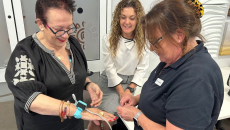
Southern NSW Local Health District has designed a remote patient monitoring program with Philips Australia to bring multidisciplinary care teams to homes, helping free up more emergency beds.

Remote Patient Monitoring
UnitedHealthcare is one payer that's limiting coverage of remote patient monitoring. But a recent OIG report on RPM and Medicare could fuel further expansion of this valuable virtual care approach.

Remote Patient Monitoring
For remote patient monitoring, this means fewer false positives, faster intervention to reduce preventable readmissions, and patients who get well and stay that way, says one CEO.

With the Technology-Enabled Meaningful Patient Outcomes initiative, some digital health developers will offer devices for care covered by the CMS ACCESS model while monitoring for real-world performance.

ACCESS is a decade-long initiative to expand tech-enabled care and outcome-based payments for Medicare patients with obesity, diabetes, chronic pain and depression.