Clinical
Though go-live has a finish line, the journey to excellence does not: Resist the urge to conclude that the way the health system uses the EHR is "good enough," advises Dr. Michael Zaroukian, also a past chair of the HIMSS board of directors.

It's been two weeks and counting with neither Medicare telehealth waivers nor any guarantee of retroactive reimbursement. That's unsettling for both clinicians and patients nationwide, says the American Telemedicine Association.

To truly drive sustainable healthcare innovation, digital health leader Mahmood Adil says health systems must rethink business models and expand how they use data, especially regarding social determinants of health.

The Digital Medicine Society said its three-part artificial intelligence guide for hospitals and health systems is designed to help with planning, sourcing and scaling health AI technologies to protect resources and deliver system-level ROI.

But somewhat surprisingly, says Martin Gaynor, professor emeritus at Carnegie Mellon University, researchers found no correlation between department closures and negative outcomes for patients driving greater distances.
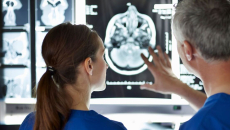
This first national collaboration will develop a localised neuroprognostication tool and adopt FHIR standards.

Julie Frey, VP of product at Wolters Kluwer Health, explains how its recently released UpToDate Expert AI brings generative AI to clinicians at the point of care, offering diagnostic and treatment guidance.

Jessica Potts, workforce strategy and operations director at SSM Health, says scheduling and staffing technologies are changing nurse managers' day-to-day tasks.
Instead of trying to chase every AI breakthrough, health systems should focus on incremental wins in stable processes to achieve measurable value quickly, says Dr. R. Ryan Sadeghian of the University of Toledo.

Also, Hato Hone St John is testing AI for clinical auditing of its ambulance service.