Clinical

The AI-driven National University Centre for Digestive Health has seen reduced cancellations, repeat procedures, and fewer avoidable complications from patients since opening in 2024.

It aims to develop and deploy AI in medicine, among other digital tools, while fostering global collaboration.

Union Minister Anupriya Patel says AI is no longer an option but a necessity.

Ahead of HIMSS26, Mayo Clinic’s Ugur Sener and Taylor Galloway preview their talk on using digital tools and decentralized trials to deliver brain cancer care remotely.
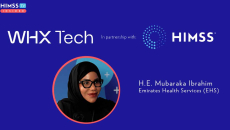
According to Emirates Health Services' H.E. Mubaraka Ibrahim, the UAE is using clinical and non-clinical AI tools across its facilities to give clinicians time back and to support precision medicine and healthier communities.
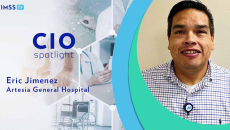
The chief information officer of the 25-bed New Mexico nonprofit describes how he's using AI to help with network defense, and how that's enabling gains in other areas. He also discusses plan for some clinical new applications of AI.

A deep learning algorithm called FaceAge could allow clinicians to improve their qualitative assessments and possibly catch diseases sooner, says Mass General Brigham oncologist Dr. Raymond Mak, who'll showcase the technology at HIMSS26.

Concept Realisation's Nasser Massoud says GCC digital health success depends on patients trusting technology, regulators supporting innovation sans safety risks and insurers paying providers fairly for telehealth services.

Michael Abrams of Numerof & Associates explains the need for the U.S. Food and Drug Administration to move faster on healthcare artificial intelligence governance, and why its drug development validation process is a good model.

Amy Tucker of Advocate Health's Sanger Heart & Vascular Institute explains what it takes to move to a scalable platform that improves clinical administration and patient care.