 | October 8, 2025
| 11:30 AM
| October 8, 2025
| 11:30 AM
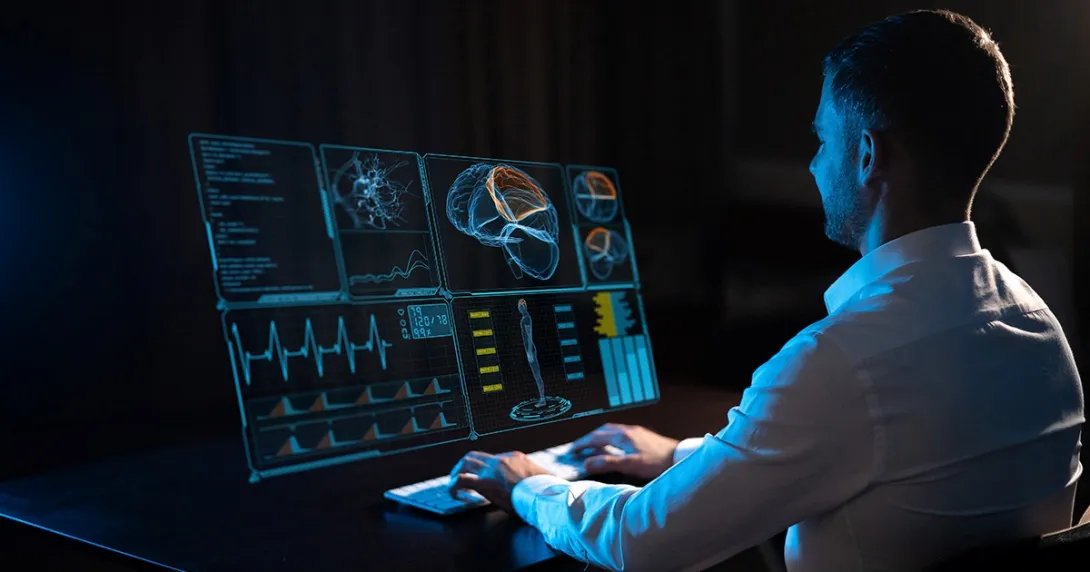
Photo: Dedalus
Without the ability to predict problems before they have an operational impact, hospitals can become stuck in a reactive loop of crisis management. Clinicians and administrators will be all too familiar with how this can affect workflows, productivity and even patient care: emergency departments fill beyond capacity, ICU runs short of beds and staff must cope with the consequences – often without any warning.
These events are nearly always predictable. Those same healthcare professionals also know that this kind of crisis rarely arrives unannounced. The warning signs will probably have been hidden in plain sight, scattered across the hospital’s fragmented systems.
But with no mechanism to correlate warnings from these disparate sources and flag up a rising risk, it remains hidden until the event is actually unfolding. By then it is too late, and a reactive response is the only resort. During a Dedalus workshop at HIMSS25 Europe, three hospital command centre case studies revealed how predictive analytics can break this perpetual cycle by helping teams to stay on the front foot. Contributors from Gregorio Marañón University Hospital, Cantabria Regional Health Authority and CHRU Nancy described the benefits of taking this approach to preparing, adjusting and acting before an emergency develops.
From reaction to anticipation
The Dedalus Command Centre uses AI-driven forecasting to connect the dots. By analysing real-time patterns in admissions, staffing, equipment use and departmental flow, it anticipates demand surges, bottlenecks and clinical pressure points. This early visibility empowers hospitals to move from crisis response to strategic prevention – a game-changer for administrative and clinical operations.
Sara Luisa Mintrone, chief marketing officer at Dedalus, says: “In today's health system, being an ‘insight-driven healthcare organisation’ means to connect clinical, operational, and financial insights and use them to deliver system-wide value. Command Center helps organizations to find meaningful insights and learn from them. Turn what is not working into continuous improvement based on real-life data from across different areas.”
Mintrone said having better operational control is a concrete example of how data insights will fundamentally change a process or decision, impacting bed management, staffing, demand forecasting.
“From a clinical point of view, possibilities are almost unlimited: shifting to value-based care, meeting demands for personalized medicine, preventing adverse events, improving diagnostic accuracy,” she added.
Preventing hospital overload
Given the opportunity to act earlier in the crisis cycle, hospitals could avoid many of the usual pain points, from overcrowded emergency rooms and unplanned readmissions to ICU overflows. These are rarely anomalies, and this only heightens the frustration of not being able to spot them in time. With the predictive layer that a command centre affords in place, hospitals can reallocate staff ahead of a peak, open new beds before capacity is reached or shift surgery schedules to avoid downstream congestion. Every hour gained reduces pressure, improves flow and limits risk – for both patients and staff.
Insight drives agility
The command centre approach is not about adding another layer of data and complexity to hospital systems. Rather, it’s about harnessing the power of AI to make smarter use of the investment that hospitals have already made in those systems.
Predictive insights from the Command Centre can reduce costly last-minute decisions, duplication and resource strain. Instead of relying on guesswork or reacting under pressure, teams get clear, data-evidenced signals that can tell them when to act, where to focus, and how to adjust. That agility pays off in clinical and operational terms, enabling greater efficiency and perhaps most importantly, improving patient care and experience.
###
To explore how predictive analytics is helping hospitals prepare for the unexpected, read more on Healthcare IT News or meet us at the HIMSS Italian Community Member Meeting in Naples on 4 December.