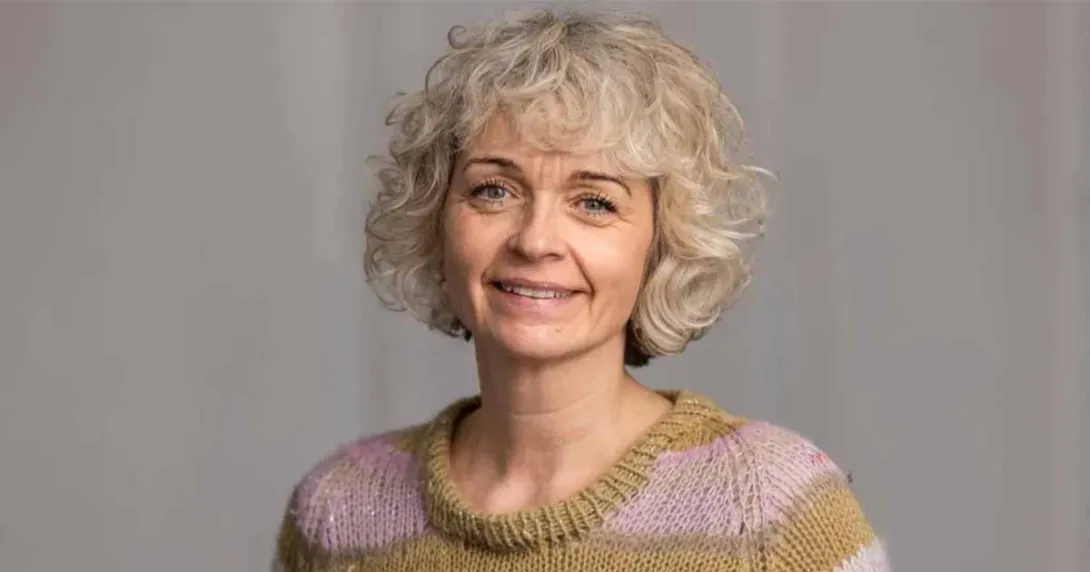
Dorthe Boe Danbjørg, chairperson of the Danish Nurses' Council
Copyright: NIKOLAI LINARES
As healthcare systems accelerate digital transformation, a new group of clinical leaders is stepping into focus: chief nursing information officers (CNIOs), digital midwives and allied health professional (AHP) informaticians. What do these roles have in common? They ensure that technology is designed, implemented and used in ways that genuinely support patient care, professional practice and healthcare system goals.
Dorthe Boe Danbjørg, a nurse by background and chairperson of the Danish Nurses' Council, shares her perspective on how these roles are evolving.
Aligning needs with delivery
IT departments or external vendors have traditionally driven digital transformation in healthcare. Today, however, clinical informatics leaders are increasingly expected to translate frontline realities into system design, ensuring that digital tools align with how care is actually delivered.
"Technology is neither neutral nor deterministic," Danbjørg said. "Its impact depends on how it is embedded in clinical relationships and everyday practice." This shift has significant implications for leadership. CNIOs and similar roles are no longer only supporting implementation; they are shaping how technology interacts with clinical judgment, patient safety and continuity of care.
Where digital tools are delivering value
When implemented effectively, digital tools can significantly improve both clinicians' day-to-day work and patient care delivery. Telehealth initiatives in Denmark have enabled nurses to connect oncology and palliative care patients in remote island communities with specialist services, bringing care closer to home. As Danbjørg explains: "On Ærø island, nurses are central to Denmark's first tele-hospice initiative, enabling people at the end of life to remain in their home community while receiving professional palliative support. Technology works because nurses integrate it into relational care and take responsibility for coordination and follow-up."
Well-integrated systems also allow clinicians to maintain oversight across care settings, supporting more continuous care pathways while reducing duplication and administrative burden.
The complexity challenge
Integrating digital tools into healthcare systems requires not only technological change, but also a cultural shift that includes all stakeholders to ensure sustainable adoption. "Digital tools increase complexity when they are introduced without sufficient attention to practice, roles and responsibility," Danbjørg noted. "Workflows should be redesigned rather than simply layering digital tools onto existing processes." Without this, there is a risk of unintentionally shifting responsibility onto patients and families, particularly in home-based and remote care settings, raising potential patient safety concerns.
A broader issue lies in the disconnect between how healthcare systems are organised and how care is experienced. Systems are often structured in silos, while care itself is continuous and relational.
Clinical informatics leaders are uniquely positioned to bridge this gap, connecting systems, teams and care settings. Their involvement in co-design is critical from the outset.
"Frontline nurses must be co-designers, not end users," Danbjørg emphasised. "Quality emerges in use, not in abstract system design. Nurses bring knowledge of patient needs, clinical judgment and everyday workflows that is essential for making digital solutions safe and effective."
Building the next generation of leaders
As these roles evolve, so should the preparation of the workforce. Clinical expertise remains essential, but it is no longer sufficient on its own. Informatics leaders must be able to critically evaluate technology, understand its ethical implications and lead complex change across organisations.
This means that education must go beyond technical skills to equip future professionals with the ability to question and shape technology in clinical contexts. "Students need tools to analyse, evaluate and question technology in relation to care, ethics and professional responsibility," Danbjørg said.
At the same time, human connection and compassion remain central. Future leaders must ensure that technology strengthens, rather than replaces, relationships between patients and clinicians.
Dorthe Danbjørg will explore these themes further at the upcoming HIMSS26 European Health Conference & Exhibition in May in Copenhagen.