 | February 26, 2026
| 4:30 AM
| February 26, 2026
| 4:30 AM
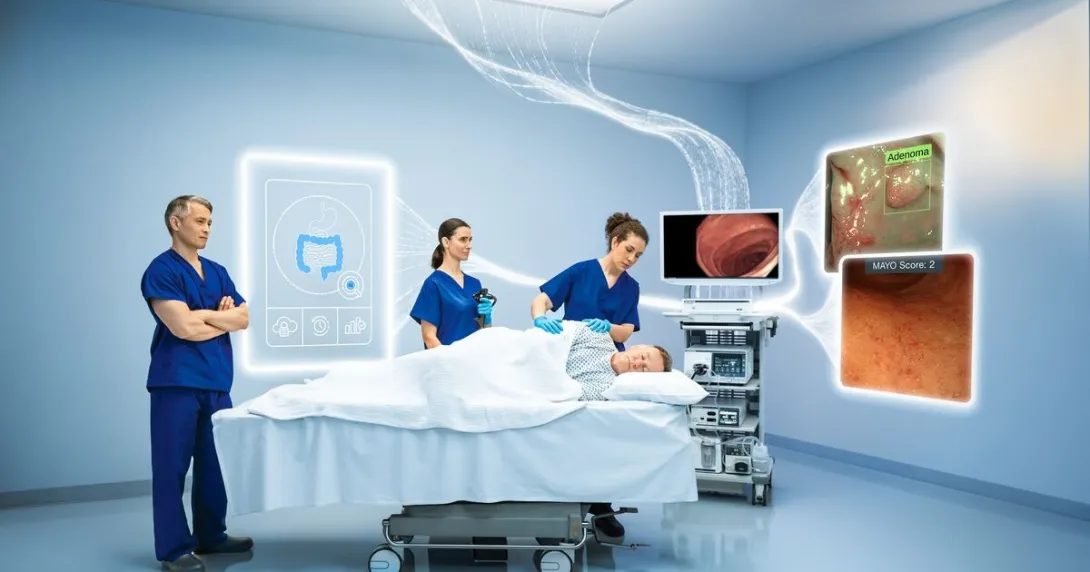
Photo: Olympus
While AI is certainly reshaping healthcare, its potential remains limited by the slow adoption of cloud-based solutions. This is especially clear in gastroenterology (GI) care. But technology providers like Olympus have put security and compliance at the heart of their cloud-enabled tools and devices. And now, trust and confidence in cloud technology among healthcare professionals and clinicians is building. A new phase of innovation is unfolding in cloud-enabled AI-driven diagnostics, aligned seamlessly with the rules set by regulators – GDPR, the EU AI Act and the European Health Data Space (EHDS) Regulation in Europe – to keep patient data safe and ensure the highest standard of AI governance.
Cloud: the backbone of AI innovation
As legacy on-premise systems struggle with the massive computing power and agility required for advanced diagnostics, true interoperability that combines EMRs, devices and AI in one ecosystem is now a critical goal for hospitals and clinicians. Olympus chief digital officer Slawek Kierner says this will make cloud the backbone of innovation, enabling solutions like the OLYSENSE CAD/AI medical device software to support faster and more accurate GI care.
“Innovation comes from how far you can optimally integrate the on-premise data centre compute – next to the patient bed but not always powered – with the cloud that is always powered and is so much more powerful, scalable and secure,” he says. “That’s where the future will take us.”
Elastic scalability
For example, cloud-based AI systems like OLYSENSE CAD/AI represent a transformative shift, enabling real-time, high-performance computation without the constraints of expensive computer hardware or complex, time-consuming software updates.
Edge-cloud hybrid architectures allow seamless back-end algorithm updates, providing clinicians with instant access to the latest AI models and improved scalability. This paradigm shift in AI endoscopy has been largely underexplored to date, although that is changing thanks to projects like the Eagle Trial, which looked at the clinical performance and safety of cloud-based AI in polyp detection.
Putting patient data safety first
Security is critical when handling sensitive patient data, and regulatory compliance is non-negotiable. Security principles like ‘Zero Trust’ and tools such as Cloud Security Posture Management (CSPM) can help to ensure robust protection through continuous monitoring and encryption, and contribute to adherence to AI, healthcare and data protection regulations.
Systems like OLYSENSE CAD/AI address these concerns head-on. The software never transfers personally identifiable health information to the cloud. Instead, it anonymises images and videos before uploading them, ensuring that only the healthcare professional can link the inference results to the patient, in compliance with the GDPR principle of ‘Privacy by Design’.
Innovation without interruption
Cloud enables hospitals to deploy new features and services instantly, without costly hardware upgrades or downtime. This agility helps to reduce operational costs and enables seamless updates, without occupying hospital IT personnel and within regulatory compliance. Solutions like OLYSENSE CAD/AI benefit from this flexibility in supporting diagnostic accuracy and clinical efficiency with the aim of improving patient outcomes.
Cloud is everywhere and is now embedded in GI care transformation. As healthcare systems scale AI innovation, their design must be rooted in security and compliance. This means that the future of digital health isn’t just about technology; it’s about governance that protects patients while enabling progress.