Population and Public Health

New survey commissioned by Motorola Solutions revealed that people in the region are willing to share sensitive data and are fancying the use of AI for requesting emergency assistance.

NEOM KSA's Dr. Peter Horn talks about the challenges of implementing precision medicine on a macro level after a pilot; success depends on strong data infrastructure, regulations tailored to each country and citizen engagement.

Also, Yashoda Hospital in Hyderabad, India, has unveiled an AI-powered clinic for diagnosing lung nodules.

The Australian Digital Health Agency is enabling allied health's access to health data and wider uptake of AI tools and other emerging technologies.

According to Alex Aliper, president of Insilico Medicine, AI platforms can cut early drug development time from five years to 18 months, which will enable the UAE to create and deliver medicines tailored for its population.

According to Dr. Scott Parazynski, OnwardAir founder and CEO, hybrid eVTOL (electric vertical takeoff and landing) aircraft give pilots full airspace visibility, making them suitable for use as air ambulances and to transport organs.

By recruiting both healthy individuals and patients to participate, Abu Dhabi Biobank intends to fuel global academic and biopharma innovation rooted in the population's unique needs, says general manager Paul Downey.

The department plans to use the company's agentic artificial intelligence to integrate disease-specific NIH data with Medicare, Medicaid, claims and state registry datasets to improve data quality and CMS governance.
SPONSORED
 |
09:00 am |
December 08, 2025
|
09:00 am |
December 08, 2025
|
09:00 am |
December 08, 2025
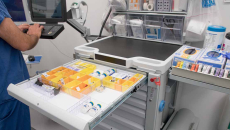
A study conducted by Michigan State University’s Axia Institute Suggests that RFID tagging can help the pharmacy supply chain better adhere to the Drug Supply Chain Security Act.

PRECISE confirms that hereditary cancers and kidney-related genetic diseases are under review for potential national genetic testing programme expansion.