Videos
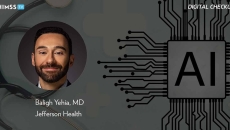
Its president, Dr. Baligh Yehia, says the Philadelphia health system has committed to returning 10 million hours back to patient care over the next three years using AI.
A study examines the mechanistic link between pregnancy with a Down syndrome fetus and an elevated risk of maternal cognitive decline. Eitan Okun, head of the Paul Feder Laboratory for Alzheimer's Disease Research at Bar-Ilan University, discusses.

The Centers for Medicare and Medicaid Services says 25% of spending is fraudulent or being abused by providers. Carol Howard, VP innovation and adoption at Janus Health, explains how the new payment rule might help.
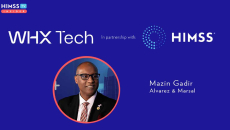
Instead of buying digital innovations, Middle Eastern countries should focus on creating and scaling up their own products while developing local workforces, says Alvarez & Marshal's Mazin Gadir.
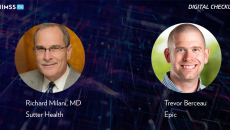
Sutter Health's CCIO, Dr. Richard Milani and Epic's patient UX R&D lead, Trevor Berceau, explain how Bluetooth-enabled medical devices that send data directly to cardiology patient portals are helping to reduce chronic care complexities.

While he stresses that AI won't replace doctors, surgeon and futurist Dr. Shafi Ahmed says it is already being used for imaging, documentation, digital surgery and agentic assistants to help build future-ready health systems.
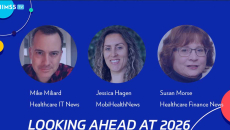
The editors of the HIMSS Media brands offer sneak peek of the year ahead: including precision medicine advances, cybersecurity challenges, policy shifts and, of course, continued evolution of AI-enabled care delivery.
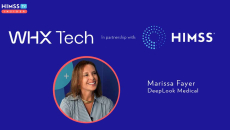
Marissa Fayer, DeepLook Medical CEO, says that true patient empowerment depends less on new technology and more on increased availability and affordability as well as culturally sensitive practices that respect patients' needs.
Remote Patient Monitoring
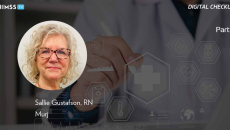
Technology could help automatically determine when the billing period ends for electrophysiologists who implant devices such as pacemakers, says Sallie Gustafson, RN, director of medical affairs at Murj.

The Emirates Health Service, according to Dr. Amina Al Jasmi, is using AI to strengthen radiologists' skills and to reduce workload by acting as a second reader that catches subtle findings humans might miss.