Privacy & Security
To an industry waiting for more information on Apple's healthcare intentions, even a few crumbs here and there are too tasty to pass up. No word from Apple on timing yet, but Reuters has reported that anonymous sources revealed Apple has held HealthKit discussions with Mount Sinai, the Cleveland Clinic and Johns Hopkins, as well as Epic rival Allscripts.
With a nod to Apple and its famous 1997 TV spot, which highlighted doers and dreamers who colored outside the lines, we profile some of the 'crazy ones' who are helping transform health IT in new and unique ways.

“We will not be attesting to meaningful use Stage 2 in 2014,” Marc Probst, chief information officer of Intermountain, told Healthcare IT News. “And frankly, most of my peers are not as well.”
There's been a lot of talk about compliance lately. Federal and state regulations. HIPAA regulations. But, if you're in charge of healthcare security, compliance is far from sufficient, says Jim Routh, chief information security officer for Aetna, one of the nation's leading diversified healthcare benefits companies.
ONC's electronic health record certification process has some serious shortcomings -- chief among them security practices that are wholly insufficient to adequately protect patient health information, according to a new report from the Office of Inspector General.
In many ways, mobile device security is an oxymoron in its current state. In fact, if you're using an Internet of Things-type device, chances are it has an average of 25 hidden vulnerabilities, according to new research, making it a ripe target for hackers.

Ann Patterson, Senior Vice President and Program Director at Medical Identity Fraud Alliance (MIFA) and a speaker at the 2014 Privacy & Security Forum in San Diego, talks about MIFA and the efforts to prevent/combat medical identity theft and fraud.
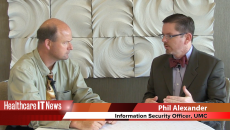
Phil Alexander, Information Security Officer at UMC and session panelist at the 2014 Privacy & Security Forum in San Diego, discusses the rise of cyber crime and the importance of personalizing employee education around security.
A Rhode Island hospital, who nearly two years ago notified 14,000 patients of a HIPAA breach involving their data, agreed Wednesday to hand over $150,000 to settle allegations that it failed to safeguard patient information.
The joys of unintended consequences never end. The Patient Protection and Affordable Care Act required hospitals to get paid based on how much they improved their patients' health rather than on how many tests and procedures were completed. The intent was to improve patient care.