Privacy & Security
SPONSORED
 |
02:35 pm |
May 31, 2016
|
02:35 pm |
May 31, 2016
|
02:35 pm |
May 31, 2016
By Mike Willingham, Vice President of Quality Assurance and Regulatory Affairs, Caradigm
The mandate for healthcare information security is clear.
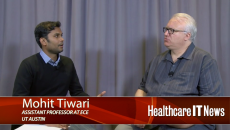
Mohit Tiwari says it's not so much the quality of encryption technology that makes healthcare data vulnerable to cyberattacks, but user error and application security in the industry.
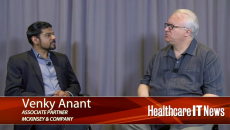
(SPONSORED) Venky Anant, Associate Partner at McKinsey & Company, discusses how the digitization of the healthcare industry has spawned the emergence of advanced cybersecurity threats to health systems and patient data.
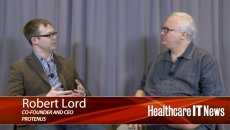
(SPONSORED) Robert Lord, Co-Founder and CEO of Protenus, details his company's innovative solutions for health data security and opines on the future of cyberattacks and how to prepare for them.
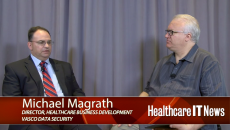
(SPONSORED) "Aside from the DEA for E-prescribing of controlled substances, there really aren't any mandates around using anything stronger than a user name and password," says Michael Magrath.
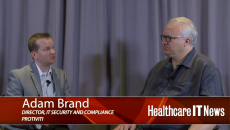
(SPONSORED) Adam Brand, Director of IT Security and Compliance at Protiviti, discusses how healthcare organizations can proactively fend off cyberattacks by "hunting for hackers."
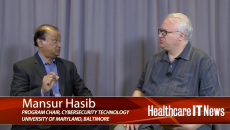
"It's the behavior of people that determine the ultimate cybersecurity of any organization," says Mansur Hasib in this clip from the 2016 Privacy & Security Forum in Los Angeles.
The document outlines eight guidelines for achieving precision medicine principles, including a ‘participant-first’ system.
Intermountain Healthcare CIO Marc Probst presses Congress for clear strategy on cybersecurity at HHS
The chief information officer and CHIME board chair testified that it is vital for Health and Human Services to institute a coordinated plan for protecting data and systems against cyberattacks.
With big issues on CISO plates, including malware, application security, cloud security and others, a new study from cybersecurity staffing firm SilverBull found that salaries are on the rise, with the highest up from $380,000 in January 2016.