Patient Engagement
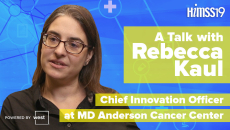
Rebecca Kaul, Chief Innovation Officer at MD Anderson Cancer Center, discusses using technology to give your patients your best, rather than leading with innovative tech that doesn't always solve the big problems.
Ineffective central systems and processes for managing patient lifecycle are resulting in a “significant gap” between patient expectations and healthcare provider reality, according to a new industry study.
With the RTLS hardware and software system in place, the medical group also has seen a 50 percent increase in face-to-face time with care teams and a 60 percent reduction in the number of steps taken by medical assistants daily.
North West Coast project receives funding to improve access to data and urgent care for people with…
The initiative is one of ten "Sprint Exemplar Projects" to be funded by UK Research and Innovation.
A new poll of CHIME members by LexisNexis Risk Solutions finds that technology execs' priorities vary widely depending on the maturity of their IT infrastructure.

Neil Jordan, Worldwide Health Leader and Connector at Microsoft, recounts how an AI-powered app for monitoring children who go home following complex heart surgery prevented tragedy.
A recent article from the HIMSS Insights Global Innovators eBook looked at the impact of a project addressing health inequality in India.

Getting insights about a patient's environment and lifestyle is just as critical as understanding genomic data, according to University of Colorado Assistant Professor Mustafa Ozkaynak.
SPONSORED
 |
10:21 am |
March 04, 2019
|
10:21 am |
March 04, 2019
|
10:21 am |
March 04, 2019
Learn how healthcare organizations are reimagining their digital infrastructure to meet rapidly changing patient expectations and the continuing shift to value-based care.

Dr. Anthony Chang, medical director at CHOC Children’s, says artificial intelligence won’t replace the empathy doctors can provide to patients but smart machines can reduce the time clinicians spend on computers.