Mobile
Despite ubiquitous information technology, patients and physicians still overwhelmingly rely on "tried-and-true" modes of communications, such as phone calls and in-person consults.
With a combination of vendor-developed and homegrown apps, Penn Medicine has a varied mobile device landscape -- that poses challenges for security, but offers opportunities for smoother clinical workflow and improved outcomes.
You might recognize her as @MandiBPro. But did you know she used to be a wedding singer? Learn more about her new life as an analytics lead at Dell, the ways she works on a treadmill and how she morphed into a computer geek.
Developers who translate clinical voices into health records are expecting big breakthroughs this spring in natural language processing.
PatientSafe plans to unveil at HIMSS15 new clinical communications client-server software that clinicians access via a ruggedized iPhone to enable mobile care coordination.

Jan Oldenburg, author of Engage! Transforming Healthcare Through Digital Patient Engagement, discusses her book and the great opportunity for patient engagement in the rapidly evolving digital healthcare solutions and mHealth app markets.
The year 2014 goes down in history as a breakout year for digital healthcare, according to a recent report from StartUp Health, whose stated mission is to help 1,000 health startups reimagine and transform healthcare over the next 10 years.
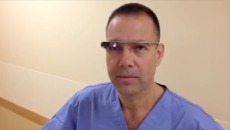
Rafael Grossmann, MD, FACS, surgeon at EMMC in Bangor, Maine, describes his introduction to Google Glass and its application to the healthcare environment.
Could younger patients be the key to achieving Stage 2 meaningful use patient access requirements? A new report finds strong desire for online medical records among the 18- to 34-year-old generation, with 43 percent of millennials saying they want to access their portals via smartphone.
In a recent interview with mHealth News, Naomi Fried, formerly chief innovation officer at Boston Children's Hospital, discusses how to get the most from data.