Medical Devices
The electrode technology is designed to improve neurological care for patients with motor issues and pain, using thin-film, flexible electrodes implanted on the brain. Dave Rosa, CEO of NeuroOne, explains.
VA Puget Sound Health Care System's X_Labs is pioneering 3D-printed bone grafts. Dr. Mark Zhang, acting assistant under secretary for health at the U.S. Department of Veterans Affairs, shows how.
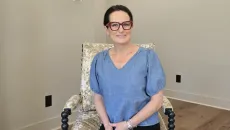
Cherry Drulis, director of Samsung's healthcare mobile B2B, teases her upcoming HIMSS26 talk, which will highlight the wearables-focused partnership between Pearson and the tech giant.

Also, Google has introduced MedGemma 1.5 in India to support its national AI healthcare development.

It aims to develop and deploy AI in medicine, among other digital tools, while fostering global collaboration.

Researchers at Northeastern University, working with several healthcare organizations and health tech companies, are developing vulnerability management platforms they hope to rapidly deploy and support.
Amy Tucker of Advocate Health's Sanger Heart & Vascular Institute explains what it takes to move to a scalable platform that improves clinical administration and patient care.

Sutter Health's CCIO, Dr. Richard Milani and Epic's patient UX R&D lead, Trevor Berceau, explain how Bluetooth-enabled medical devices that send data directly to cardiology patient portals are helping to reduce chronic care complexities.
Remote Patient Monitoring
Technology could help automatically determine when the billing period ends for electrophysiologists who implant devices such as pacemakers, says Sallie Gustafson, RN, director of medical affairs at Murj.
Remote Patient Monitoring
Sallie Gustafson, RN, director of medical affairs at Murj, discusses recent survey findings that verified billing is the undisputed top concern for electrophysiologists.