Meaningful Use
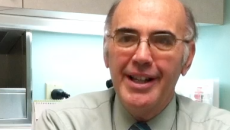
Lawrence Losey, MD, talks about his role as CMIO at Parkview Adventist Medical Center in Brunswick, Maine.
Moore's law is elegant in its simplicity - and world-changing in its significance. And, as hard as it might have been to believe when Intel co-founder Gordon Moore posited it back in 1965, it has more or less held true for the half-century since.
Whether the compliance deadline delay announced last February by the Department of Health and Human Services stalled progress on ICD-10, or provided an opportunity to hone implementation timelines, all depends on where a particular healthcare organization was prior to that announcement.
When Medicomp chief executive officer David Lareau hears U.S. chief technology officer Todd Park talk about the need to find the right technology to set data free and make it usable, Lareau wants to tell him he has just the thing.
Two Stage 6 hospitals, one in Manhattan and the other in Honolulu - Mount Sinai Medical Center and Hawai'i Pacific Health - are due to pick up their 2012 Enterprise HIMSS Davies Awards of Excellence at the 2013 Annual HIMSS Conference & Exhibition in New Orleans, March 3-7.
Family physicians are adopting electronic health records (EHRs) at a much faster rate than earlier data suggested, reaching a nearly 70 percent adoption rate nationwide, new study findings reveal.
As National Coordinator for Health Information Technology, Farzad Mostahari, MD, has, since 2011, led the government's efforts to transform the nation's healthcare structure into a 21st century digital system. The goals are to improve patient care, increase efficiencies and lower costs. Mostashari delivered a rousing keynote talk at HIMSS12, and he is slated as a headliner again this year (Thursday, March 7, at 8:30 a.m.).
Healthcare IT insiders regard interoperability as the key to effective health information exchange, and some might say, the hardest to pin down thus far. Industry leaders agree there can be no true exchange without interoperability. How can healthcare transformation occur unless doctor A's EHR can process the information received from doctor B's EHR?
In a Jan. 14 letter to National Coordinator Farzad Mostashari, MD, commenting on the Health IT Policy Committee's proposals for Stage 3 meaningful use, James Madara, MD, executive vice president and CEO of the American Medical Association, put forth some of the AMA's "concerns and recommendations" about the program.
Anyone who understands the importance of continuity of care knows that health information exchange is essential. How are we supposed to cut waste and duplication from the healthcare system and truly focus on patient welfare if doctor B has no idea what tests doctor A conducted, or what the results were?