Interoperability

Interoperability standards were originally developed in the late 1970s and early 1980s to allow different clinical systems within hospitals to exchange data with the patient registration system. Infor Cloverleaf®, one of the original interface engines in use then, is still the core interoperability engine for more than one-third of U.S. hospitals.

A prehospital health information exchange in Michigan that provides bidirectional interoperability will bridge ambulatory data gaps and enhance care coordination en route to the hospital and during post-discharge care transitions.

Lisa Hanselmann, Inria's European project manager, talks about how the FLUTE project is building a GDPR-compliant federated learning platform to allow researchers to share both real-world and synthetic data on prostate cancer.

As Italy develops a national digital strategy requiring healthcare data exchange across all 20 of its regions, Marco Foracchia, AUSL Reggio Emilia CIO, recommends first steps for hospitals that haven't yet begun digital transformation.
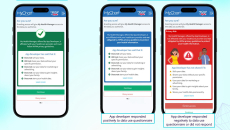
Patients can now release all their electronic health data to apps of their choice through TEFCA's record location services, and understand if the data exchange they authorize is protected under HIPAA.

SPONSORED
 |
10:25 am |
August 05, 2024
|
10:25 am |
August 05, 2024
|
10:25 am |
August 05, 2024
Learn from hospital executives who are future-proofing the care environment for patients and providers.

With help from Oracle, Innovaccer and Salesforce, the South Florida provider is scoring big population health wins, including a 7% increase in coding gap closure rate and a 17% increase in annual wellness visit completion rates.

Artificial intelligence continues to permeate technologies that providers use. This week, it's helping to find relevant talent to improve data usage in care coordination and enhance signal-to-noise ratio in MRIs.

Oversight for healthcare technology, data and AI policy and strategy will be grouped under the renamed ASTP/ONC, while the 405(d) cybersecurity program will move to the Administration for Strategic Preparedness and Response.

Some industry leaders are concerned about compliance time frames. Others say unstructured data won't be tapped to its fullest potential under the proposed rule.