Financial/Revenue Cycle Management

In what it's calling "one of the most ambitious initiatives in its 250-year history," NewYork-Presbyterian has launched a new $2 billion capital campaign that has advanced technologies and digital transformation as core goals.

AKASA cofounder and CEO Malinka Walaliyadde says automation has helped the revenue cycle company find a return of $1.5 million in recovered additional revenue per each $1 billion of total patient revenue.

With automation, turnaround times are now 40-45 days – way down from 90-120, previously. And before the tools were in place, the team was credentialing eight applicants per month – now that number is 35.

BRIDGE – Blueprint for Resilient Integration and Deployment of Guided Excellence – is meant to be an "evidence-based framework that health systems can rely on to not just adopt AI but to help scale it across their operations."
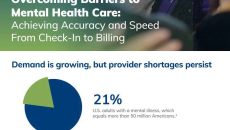
Although Medicaid is the single largest payer for mental health services, states’ disenrollments and changes to Medicaid managed care programs complicate the billing and claims process further.

Reimbursement requirements for mental and behavioral health services have become more complex, leaving many providers struggling to balance the priority of the patient experience and financial stability.

If mental and behavioral health patients don’t present insurance information during intake, Medicare or Medicaid may be billed when a patient is actually covered under a managed care organization or Medicare Advantage plan.

Dr. Michael Poku, chief clinical officer at Equality Health, discusses the role technology plays in the organization's VBC model and highlights results it has achieved for its member primary care practices.

Longitude Health says it plans to invest in solutions to address healthcare's most complex challenges.