Artificial Intelligence
The National Neuroscience Institute (NNI), the national specialty centre for the management and care of neurological diseases in Singapore and Iota Medtech, a local medtech company specialising in AI and surgical robotics, signed a Memorandum of Understanding (MoU) to develop a system to sort brain scans of head injury patients in order of urgency.
A new AI service promises to improve physician performance by doing the typing for them.
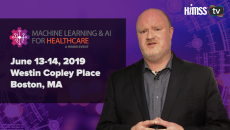
The Boston Machine Learning & AI for Healthcare event focuses on how to build healthcare data competency and acquire new AI skills.
The Joondalup Health Campus and Princess Margaret Hospitals in Australia has used artificial intelligence to accurately diagnose common respiratory disorders in children.
Northwestern University and Google have partnered to use AI technology to spot cancer earlier.
Precision medicine and clinical trial matching specialist Massive Bio is partnering with the initiative. Massive Bio’s precision medicine approach is based on a genetic understanding of the patient, allowing doctors to better select treatments most likely to help those patients.
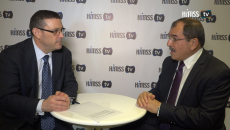
Artificial intelligence will become effective in two to three years, although robots will still require human beings, according to Mahmoud Saleh El Halik, the head of Health Informatics at Latifa Women and Children's Hospital.
Livio AI, along with the Thrive Hearing Control mobile app, which measures the brain benefits of wearing hearing aids by tracking the user's hours of daily use, became available this week.
The informatics group says the feds should do more to protect against bad data and algorithm bias, and keep cybersecurity top of mind in its software-as-a-medical-device rules.
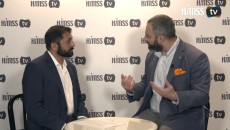
Data hubs can enable AI research and actionable insights by bringing together different sources of data and reducing organizational data silos, says Esteban Rubens, global principal for enterprise imaging at Pure Storage.