Artificial Intelligence

For all its potential benefits for healthcare, it's still critical to understand how patient data is being collected and used for AI models, says Sara Shanti, a partner in Sheppard Mullin's Chicago-based Corporate Practice Group.

Andreessen Horowitz investment partner Jay Rughani discusses the paper he and his colleagues published recently about clinical use cases of AI, and outlined steps regulators should take for reimbursing providers using the technology.

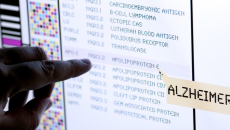
A new law passed in New York and legislation introduced in Ohio are just two of the latest examples of a legislative push to expand insurance coverage for biomarker testing.

Robotic-assisted bronchoscopy enables doctors to perform minimally invasive biopsies in distant areas of the lungs, including small nodules in the peripheral regions.

The year ahead will see policies evolving along with the tech, says Brigid Bondoc, partner and life sciences attorney at Morrison Foerster, who discusses regulatory approaches that foster innovation while protecting safety.

Being a cybersecurity professional has its difficulties – like tackling bad actors and working out how AI can improve or hinder strategies to ensure healthcare system security, says Richard Staynings, chief security strategist at Cylera.

A randomized clinical vignette survey across more than a dozen states, with hospitalists, NPs and PAs taking part, evaluated systematically biased algorithms and how clinicians make decisions with image-based AI guides.

Tom Hallisey, digital health strategy lead for the Healthcare Association of New York State, offers thoughts on recent ONC regs on model transparency – and some tips for deploying ambient AI intelligently.

1990 Suwa Seriya, now equipped with Mediwave's emergency response suite, posts a response time of 11 minutes and 38 seconds.