Artificial Intelligence

HIMSS24 APAC
Korean IT leaders share innovations in digital health, including the use of LLMs.

Government and industry cyber pros aren't always confident in their organizations' abilities to recover from cyberattacks, two recent surveys suggest. They say underfunded security budgets are causing vulnerabilities in the face of pervasive threats.

They recognize the promises of faster diagnosis and easier access to treatment and cost info, says Mark Polyak, president of analytics at Ipsos. While they're comfortable with AI for administrative tasks, they're wary of clinical applications.
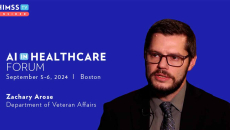
"It's a disruptive technology, and we're all trying to figure it out," says Dayton VA Medical Center HTM Service Chief Zachary Arose. He discusses research applications, imaging innovations and operational efficiencies.
HIMSS24 APAC
Great Ormond Street Hospital's Dr Shankar Sridharan shares his take on AI application in healthcare and user responsibilities.

HIMSS24 APAC
APAC hospital IT heads evaluated their respective experiences, barriers, and outlook on AI deployment.

HIMSS24 APAC
APAC digital health leaders have emphasised the importance of collaboration and innovation to accelerate digital transformation in healthcare.

While there's been progress across government and industry, the agency said the new technology strategy emphasizes health equity, public health, AI and cybersecurity to better connect the health system with health data "for all health IT users."

A Carnegie Mellon University professor who specializes in responsible AI and generative AI discusses their importance in healthcare and combining the two – which can be tricky.

It's already happening: CFOs are getting Teams calls from their "CEO" asking for reports on financial transactions, says ChristianaCare CISO Anahi Santiago ahead of her appearance at the 2024 HIMSS Healthcare Cybersecurity Forum.