News

SPONSORED
 |
10:00 am |
July 12, 2021
|
10:00 am |
July 12, 2021
|
10:00 am |
July 12, 2021
Two HIMSS Market Intelligence surveys show that many organizations lack the data needed to support analytics initiatives.
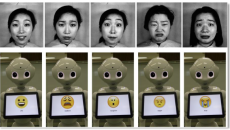
New study details how the Commission and its Japanese partners have created smart living environments with care robots.


SPONSORED
 |
04:07 pm |
July 09, 2021
|
04:07 pm |
July 09, 2021
|
04:07 pm |
July 09, 2021
Rick Gannotta, SVP, Chief Healthcare Administrative Officer at Masimo explains how hospital automation helps eliminate care gaps.

The Department of Justice says the defendants breached a provider's EHR and used proceeds from stolen data to buy SUVs, off-road vehicles and jet skis.

HIMSS21
In the inaugural episode of the Changemaker Podcast series, Alison Connelly-Flores, CMIO at Bronx-based Urban Health Plan, describes the hard-hit early days of COVID-19, strategies for vaccine distribution and the value of social determinants of health.

The Commons Project announced on Thursday that it had released a free COVID-19 vaccination verification app.
The SMART Health Card Verifier, available for download on iOS and Android devices, is aimed at allowing users to scan an individual's SMART Health Card QR code and confirm their vaccination status.
WHY IT MATTERS
A handful of major pharmacies and vaccine providers, including Walmart, Sam’s Club, UC San Diego Health, and the states of California and Louisiana, have already announced that vaccine recipients would be issued SMART Health Cards (or other apps built on the SMART Health Card framework): digital vaccine records that can be shared with compatible services.
More providers and states are expected to begin issuing the cards in the coming weeks.
"SMART Health Cards were developed by a coalition of private and public stakeholders with the goal of empowering individuals with access to a trustworthy and verifiable copy of their vaccination records in digital or paper form," said Dr. Christopher Longhurst, chief information officer at UC San Diego Health.
"The cards only contain the information required to verify your vaccination or test status, and the choice of how and when to share that information is totally up to the individual," he said.
Now, the newly released app is intended to allow businesses, schools, sporting arenas and other organizations to quickly determine the validity of those Health Cards. The app will also check whether the issuer is a verified health data source from the CommonTrust network.
Developers say the verifier app does not store or share any personal information, although it does display key data including issuer name, vaccine type, dates of vaccine doses, and the recipient's name and date of birth.
THE LARGER TREND
The Commons Project Foundation is in the steering group of the Vaccination Credential Initiative, along with representatives from Mayo Clinic, MITRE Corporation, Microsoft, Evernorth, CARIN Alliance, UC San Diego Health and Apple.
A number of health IT heavyweights – including Allscripts, Beth Israel Lahey Health, CARIN Alliance, Cerner, Change Healthcare, CPSI, Epic, HIMSS (parent company of Healthcare IT News), HL7, IBM, Imprivata Mayo Clinic, Meditech, Microsoft, MITRE, NextGen, Oracle, the Sequoia Project and Zocdoc – have also loaned their expertise and resources to VCI.
The result is the SMART Health Card: interoperable and verifiable vaccine record technology.
The project, which has been months in the making, is aimed at allowing vaccinated people to show proof of their inoculations and safely return to group events.
ON THE RECORD
"For people to be truly empowered with their health information, meaning that they can use and share it in the ways they find valuable, the data must be able to be widely accepted and trusted,” said JP Pollak, cofounder and chief architect at the Commons Project.
"The addition of the SMART Health Cards Verifier App to the ecosystem will make that reality much more achievable," he added.
Kat Jercich is senior editor of Healthcare IT News.
Twitter: @kjercich
Email: kjercich@himss.org
Healthcare IT News is a HIMSS Media publication.

HIMSS21
A deputy chief information security officer offers a comprehensive checklist for infosec leaders, helping ease the daunting task of talking cybersecurity with health system leadership.

A new report released by the EIU shows that new hybrid models of care – involving in-person care, remote care, and predictive modelling supporting real-time care – will emerge post-pandemic.

The Boston-area health system hopes to have two clinical systems live by September and for the full digital platform, including 300 other apps, to be operational by this time next year – offering big opportunities for scaling AI and machine learning.