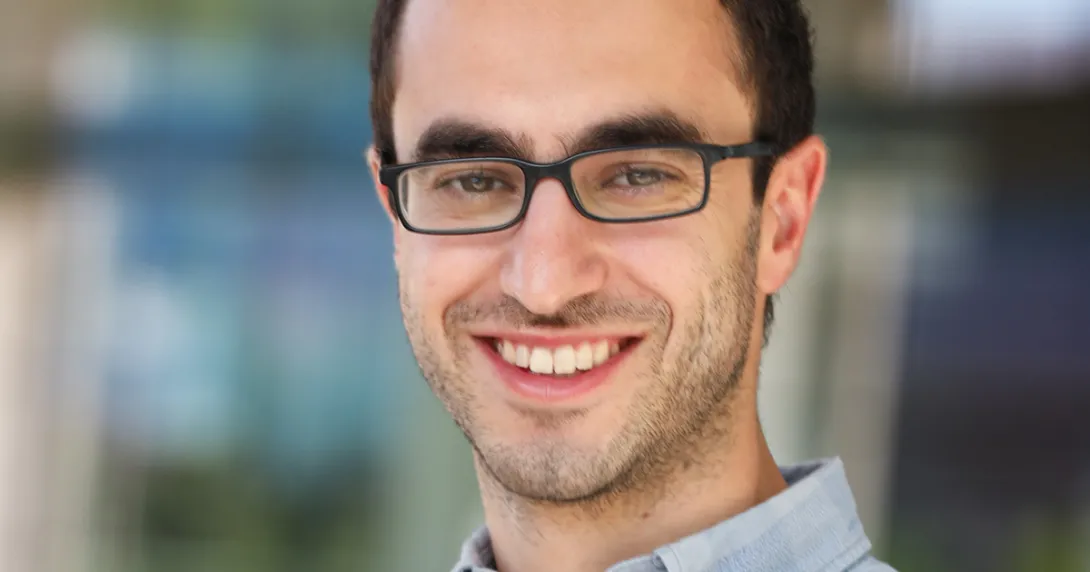
Mark Sendak, founder and CEO of Vega Health
Photo: Mark Sendak
A new healthcare technology company launched this Thursday with a novel mission: to help hospitals and health systems – many of which may not have the resources or expertise to develop and deploy artificial intelligence advances of their own – succeed with validated AI tools that are fit for purpose and well-suited to their own strategic goals.
Backed by $4 million in seed funding from Bessemer Venture Partners, Vega Health will offer a curated marketplace of what it describes as best-in-class healthcare AI technologies, for a variety of use cases, that have already been proved safe and effective in real-world settings.
It will then team up with health systems to help implement the tools they select. Once up and running in their local environments, Vega Health's AI experts will monitor their performance and assess how they're contributing to a provider's particular clinical or operational needs and goals.
Vega Health founder and CEO Mark Sendak says the company will offer another service: It will work with health systems and IT innovators to help commercialize and bring to market promising AI models and homegrown tools that otherwise might have stayed hidden and siloed in the organizations where they were developed – offering distribution channels and implementation expertise for effective AI technologies.
Researchers have shown that most AI initiatives are unable to scale beyond the pilot programs. And an MIT report recently showed that 95% of enterprise AI projects are still not showing measurable return on investment.
Vega Health aims to connect health systems with AI tools that work – and work for them – offering an alternative to a confusing and hype-filled AI market by helping them find technologies that can help advance their strategic goals and then offer what it says will be unbiased monitoring of those tools.
"Healthcare deserves AI that solves real problems, demonstrates tangible value, and scales quickly," said Sendak in a statement as he launched his new company.
You've read about him here before, in his capacity as pop health and data science lead at the Duke Institute for Health Innovation (DIHI) and a cofounder of the Health AI Partnership.
"Healthcare needs exactly what Vega Health provides: objective and practical AI expertise from someone who has actually made AI work in real clinical settings," said Lance Co Ting Keh, venture partner at Bessemer and Vega Health cofounder. "Mark’s track record at Duke has enabled him to build deep relationships across healthcare, and his vision for Vega Health is backed by the authority to deliver results."
"During my time at Duke, I saw too many impactful AI solutions remain siloed in the sites they were created," Sendak said. "I saw how difficult it was for health systems to adapt and implement effective solutions, even if those solutions worked elsewhere."
We spoke with Sendak this week about his plans for Vega Health, and how it can help healthcare organizations that might otherwise not have realized the benefits of AI – and AI developers who might not otherwise have seen their models get the distribution and adoption they deserve.
Q. Why did you decide to launch this company, and why now? From our past conversations, I know that helping smaller healthcare organizations make sense of and make use of AI is something you've been working on for a while in your work with Duke and the Health AI Partnership.
A. For me, this feels like the logical next step of what I've been trying to do at both DIHI and through Health AI Partnership. On one hand, I've been a developer of AI solutions at Duke and have been very fortunate to see the impact of successful implementations. There's also lots of unsuccessful implementations and lessons learned and just how hard it is. But I've seen that there are solutions that, if scaled, can meaningfully benefit patients.
Then, with the Health AI Partnership, that really gave me a front row seat to gain visibility into what the challenges are broadly for organizations that don't have the expertise and capabilities of Duke to really make the best use of these technologies.
One of the things that I had to come to terms with at Health AI Partnership, especially as we were doing the Practice Network, is that education didn't feel like it was enough, or could move fast enough, to support the need. There's 6,000 hospitals, there's 1,600 federally qualified health centers.
Wearing my Health AI Partnership hat, we still are working on scaling the practice network, but we worked with five organizations last year. I was trying to reflect a lot last year in 2024 on how do we scale? How do we move faster? How do we start to centralize some of these support services?
I had a conversation with an advisor who does a lot of work with rural hospitals, and his feedback about Health AI Partnership was: "Mark, there's a lot of rural hospitals that don't have people that are going to go online and read these materials. They just don't have the capacity."
I told him, "You're right. I think we just need to relieve the burden entirely off their plates so they don't have to think about how to evaluate every AI use case, and how to monitor every AI use case."
I think gradually through these different experiences, I came to the notion that there has to be an external entity that does this on behalf of organizations. But while doing that, you could also serve as a distribution channel for all the innovators that I've gotten to know over the last decade who do phenomenal work that stays siloed within their organization.
I've always liked two-sided marketplaces because it's really about creating value for multiple stakeholder groups, and it's about aligning incentives. For me, that just always felt like the right type of business – where it's not me trying to come in saying I have the one solution to your problem, and my solution is better than anybody else's, and I want to lock you into my solution. This is much more, how do we facilitate transactions to always deliver optimal value to our customers?
Q. Are those customers, primarily in the early going, going to be small, rural, FQHC-type places? Or is it anyone who's interested?
A. Good question. The thinking has evolved over the last few months as we've been talking with potential customers. I would say the core – what's the phrase? ideal customer profile, or ICP? I'm still learning all the business terms! – the main ideal customer profile is community hospital system, multiple hospitals, multi-billion dollar annual revenue organization that's not a high-profile academic medical center, that does not historically have deep expertise in building, implementing, and evaluating AI solutions.
That was the original thesis. I would say we've seen interest from both adjacent groups. At the high end of the market, when I went to some of these academic medical centers, I would tell them, "Hey, you have all these faculty doing great work. I want to be your external distribution partner."
What I heard was, "Yeah, the faculty do great work, but they also make a giant headache for our IT organizations because individual faculty do their own bespoke integrations. They don't have the resources to maintain these things long term. So they try to hand it off to IT, and that can create a lot of friction internally."
They reflected back, if Vega Health has a platform that can be the central unifying platform for how we implement and monitor internally built solutions that could be really valuable. So that was a market need even within the academic medical center community.
And then originally, I didn't know how well Vega Health could serve FQHCs and critical access hospitals, but we are seeing early interest in organizations that support large numbers of those entities. I don't necessarily see us having single contracts with single FQHCs, but we may be able to serve that segment through entities that support larger numbers of those rural and community health centers.
Q. Do you have any early customers you're able to name?
A. Not yet. Hope so soon. We're getting close.
Q. So you're going to curate a marketplace of "best-in-class healthcare AI solutions." How? How many? How does that work? How do you build your suite of technologies and tools?
A. The place that we started was the 10 years of experience we have at Duke. You can go to DIHI.org, you can go to the project website. We've done more than 100 projects. When we were first thinking about what to bring to market first, being a VC-backed company, we have to show value quickly. We're going to start with hospital-based use cases: the emergency department, the inpatient setting, intensive care unit and surgery.
We're bringing out about a dozen assets out of Duke. Then in parallel, we're working with developers as leading academic medical centers to get non-exclusive distribution rights with revenue share for their internally-built solutions.
I will tell you that across the board, there's interest. Most of these institutions have not realized much commercial benefit from these internal inventions. This gives them a new mechanism to commercialize, and we're asking for non-exclusive rights. So, we're really trying to make this easy for innovators and researchers.
I do want to take a step back and refocus on what the company does. You mentioned one piece, which is the curated marketplace of best-in-class assets. We are focusing on the hospital.
Number two is the platform. That's the data engineering infrastructure that we've been running and doing for close to a decade, where we host 50 to 60 algorithms internally. We're going to be taking that out and installing it behind the firewall of our customers. It's common infrastructure to host the suite of applications on the marketplace.
Number three is monitoring. Monitoring is where we get the opportunity to be the objective reviewer of the value created by the individual products and communicate back to our customers what's working and what's not working. What should they continue investing in and scale across their organization, versus what should they shut off and stop paying for.
And the last piece is the external distribution partner for commercialization. We're looking at partnership opportunities across those four domains.
Q. When you talk about monitoring a particular tool for its efficacy and assessing its performance and how it's contributing or not to clinical and operational outcomes, what are some keys to doing that effectively?
A. There's three domains in monitoring. One piece to monitor is the technical performance of the algorithm and its accuracy. Essentially, is it able to predict at a level of accuracy that is aligned with your expectation? Or if there's other performance measures for large language models – completeness, comprehensiveness – you have to have some measure that you monitor post-implementation.
The second piece is adoption by frontline workers. Me, and so many others in the field, have seen really great technologies that are turned on that frontline workers ignore, and there's no change in behavior. So you have to be monitoring adoption. You have to be monitoring the user actions, the interventions and everything that is supposed to happen in response to the output of the algorithm.
And then the third piece is outcomes. What is the outcome you're trying to move the needle on? The reason we're going to try to isolate each of those domains for monitoring is on one hand, to protect the innovator or inventor, and also to be partners to the organization. Because working with us, as I mentioned, we may see scenarios where the model is actually doing exactly what it should be doing, but it's the change management and implementation that is going poorly.
So we want to make sure the innovator knows their product is actually doing what it should be, but then it's going to be up to us to be communicating and supporting the customer with the implementation and change management.
An example that comes to mind for me often, where you have lots of models, you have lots of interventions, but then questionable change in outcomes is readmissions. Lots of people predict readmissions. People do all sorts of post-discharge programs for readmissions. It's still really hard to move the needle on the readmission outcome.
Hopefully, Vega Health serves as a mechanism to diffuse the expertise, not just around the technologies, but what interventions are people setting up and what care programs. That way, once we start to see success somewhere, we can rapidly diffuse that to other customers.
Q. I was thinking, and correct me if I'm wrong, but your business model sounds a bit like Aledade, Farzad Mostashari's company, which comes in and helps organizations with a complicated subject – in that case, it's value-based care models, and in your case, it's AI. Is that the way you see it?
A. Yeah. I'll validate that. The piece that I thought was cool as I learned about Aledade that I draw a parallel to is Farzad was a practitioner. He came from government. He went to Brookings. He spent time creating these public playbooks of how to execute in accountable care organizations. And then created a company that centralized a lot of the support functions for small entities to be able to participate in the new reimbursement model.
I see the parallel with what we did at DIHI, we became experts in building and implementing. Health AI Partnership is when we tried to create the content to support other organizations. And now Vega Health is saying, "Okay, we need to actually just centralize this, do it on behalf of small organizations that are unable to really navigate this new era on their own."
Let me give you the other analogy. My favorite business model analogy is Costco.
The idea of Costco is their mission is to bring the highest quality products at the lowest possible cost for their members. You pay an annual membership to get access to a curated marketplace, and they do extensive due diligence on the front-end to bring the best products in their stores.
They have really savvy product buyers across categories. They test in their stores, they scale in their stores. Then on the back-end, they have a very generous return policy. If you buy something that sucks, you can take it and get your money back.
The idea with Vega Health is that the infrastructure implementation in the platform is the annual subscription to get access to the curated marketplace. Then we do revenue share in the marketplace, but we also have domain experts who are helping us identify what are the best emerging products in each of the clinical domains.
We're going to do the post-implementation monitoring. If we see that something sucks, we're going to tell you, and we're going to tell you to stop paying for it. But it's really about how we focus on distribution and optimizing value for the customers' investments in AI.
Q. What does this mean for Health AI Partnership? Is that still a going concern? Are you still involved?
A. Yes. I will remain on the leadership council of Health AI Partnership, and the work of HAIP will continue. I would say where I think that plays such a critical role, one is the surfacing and dissemination of best practices. I think it makes a lot of sense for that to stay housed and coordinated by a university.
The other is convening. So HAIP does convenings amongst the core sites, amongst the practice network sites. We send a bunch of our organizations to HIMSS, and you've interacted with some of them.
Then the third piece is advocacy. There is a need for advocacy for more public sector involvement and investment in IT infrastructure, especially in the safety net. And we're actually very excited by the Rural Health Transformation program and what's happening at the state level now. To me, they're complementary, and there's ways that Vega Health will be able to augment the work and be a last mile implementation partner for some of the best practices that come out of HAIP.
Q. Anything else that I haven't asked that you want to make sure I know?
A. One of the first validation points I went after when I was thinking about doing this was going to my peers and mentors in the field, many of whom have published some of the seminal papers on successfully implementing AI within their organizations. Every single one of them was excited.
For some of them, their solutions were proprietary and owned by the university or health system, so we're going through the formal process to get distribution agreements. Others, they actually put their code in the public domain. They've open-sourced their models on GitHub with the idea that it would help drive broader adoption.
As you probably know, health systems don't have their IT analysts go to GitHub, download models to implement in the EHR. When I went to them, saying, "Hey, would you be interested in a distribution partner?" They were like, "Yes, of course. If there was someone to help productize the algorithms that I'm already trying to put out in the world, that would be amazing."
What we've started to see are the cross-side network effects, where we have these innovators who are well-recognized in the field, who have institutions that have reached out to them in the past to actually implement their innovations, and they have never been able to.
Because when I worked at Duke, I didn't have the time to support implementation of things in other health systems. My job was just to improve things at Duke. We've had folks now connect us to health systems that have been in touch with them over the years to use their technologies. Now, Vega Health is the channel through which people can access these things.
Mike Miliard is executive editor of Healthcare IT News
Email the writer: mmiliard@himss.org
Healthcare IT News is a HIMSS publication.


