
Mike Miliard

Previewed at the company's annual summit, the electronic health record, built on Oracle Cloud Infrastructure, offers secure automation across clinical workflows, enabling faster insights at the point of care with streamlined documentation and more.

From EHR optimization to AI-enabled CDS, big advancements are happening with biomedical informatics. Chris Harle, researcher at Regenstrief Institute and professor at Indiana University, discusses data science, provider experience, patient safety and more.

In what it's calling "one of the most ambitious initiatives in its 250-year history," NewYork-Presbyterian has launched a new $2 billion capital campaign that has advanced technologies and digital transformation as core goals.

Its telehealth technology will use the Suki artificial intelligence platform to generate clinical notes to help reduce documentation burden.

BRIDGE – Blueprint for Resilient Integration and Deployment of Guided Excellence – is meant to be an "evidence-based framework that health systems can rely on to not just adopt AI but to help scale it across their operations."
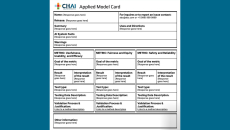
The coalition's new draft certification frameworks, which could be finalized in six months after more stakeholder feedback, offer a way forward for artificial intelligence assurance labs and basic model transparency.

The modernized, outcomes-focused AMAM is meant to help health systems keep pace with the rapid evolution of analytics technologies and artificial intelligence and "support equitable, data-driven decision-making at scale."

With large ransomware breaches up more than 260% since 2018, "the health care sector needs to get serious about cybersecurity and complying with HIPAA," says the director of the HHS Office for Civil Rights.

ChristianaCare and UAB Health are set to make the move to Epic, while Oracle has a new pair of critical access hospitals to its CommunityWorks suite and is looking "beyond the EHR."

The aim is to bolster more consistent use of the HL7 interoperability standard across HHS, says the Assistant Secretary for Technology Policy, and help "break down the silos separating patients, providers, payers, public health and research."